Cultural Tour Of Ancient Turkey
We fly to Istanbul but for now only to change planes and fly to Ankara where we will meet our guide and our other travelling companions. What will be our second exploration of Istanbul, has to wait until the end of our tour.
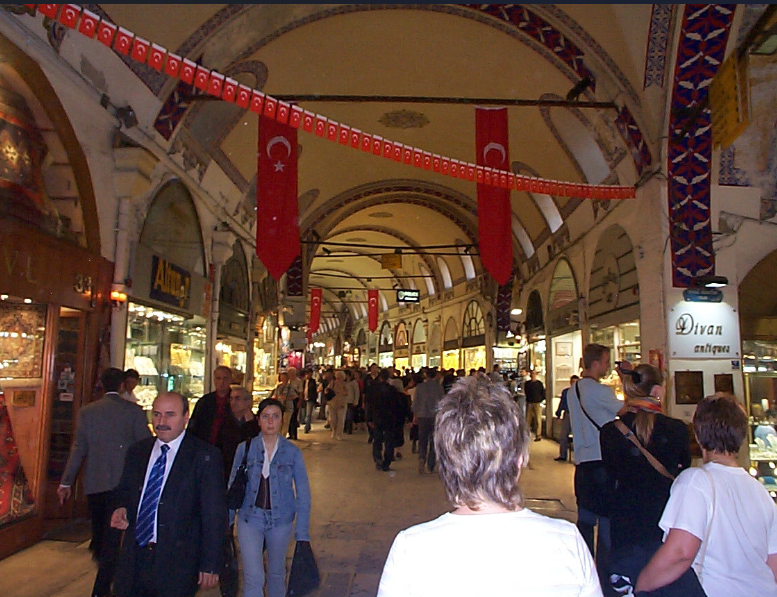
In 2003 I bought a leather jacket, here, at the Grand Bazaar.
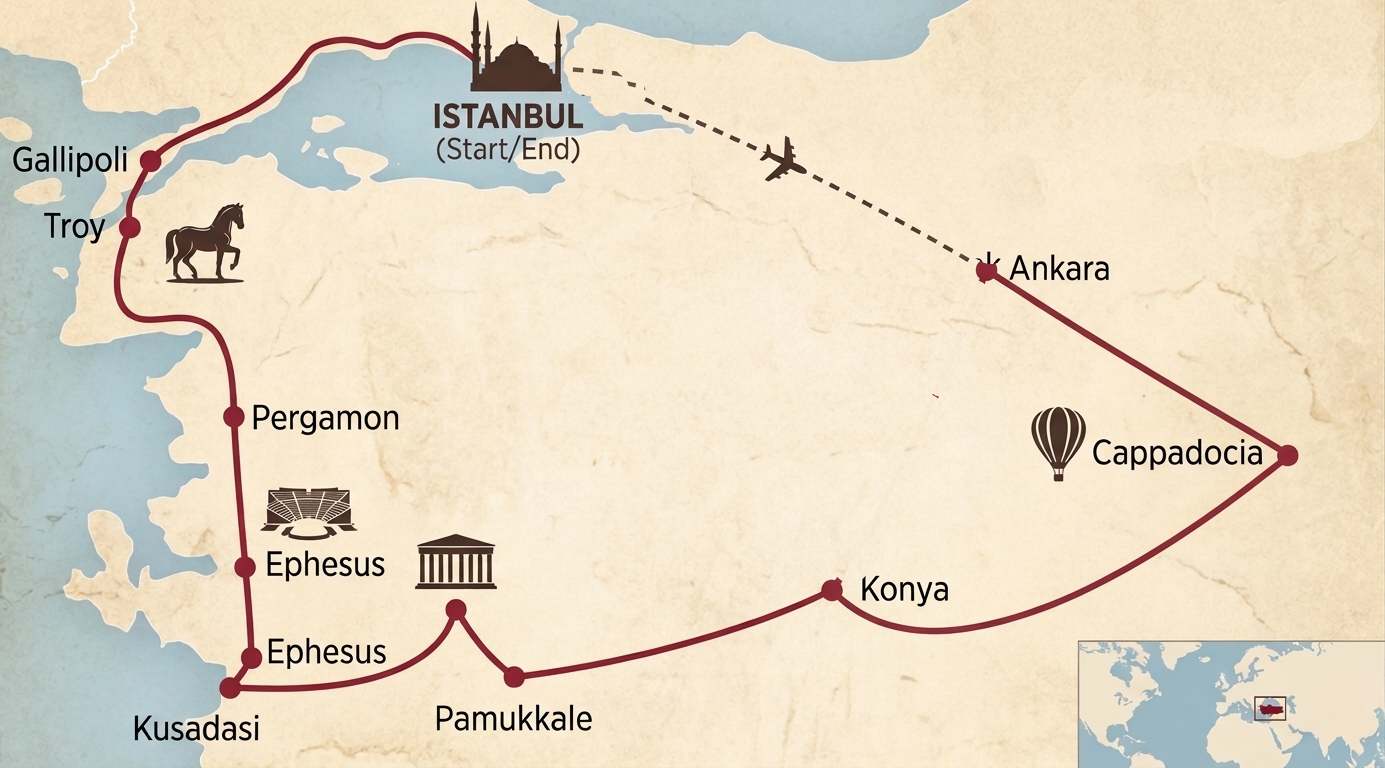
Looking ahead, our journey is remarkable: Ephesus’ grand Library of Celsus, gazing over Göreme’s dramatic fairy chimneys,
and walking Pergamon’s ancient stone paths. All offer a tangible connection to the past. Submerging in the mineral-rich waters of
Hierapolis alongside Roman columns blending Greco-Roman engineering with breathtaking Turkish landscapes.
Back to index
Road Trip - 7,800 steps
Our Concierge for the trip is Noel, our guide is Ahmet and our driver is Bora. All three are absolutely amazing.
We leave the outstanding Movenpik hotel and its breakfast buffet on our dream liner coach and head into Asia Minor and connect to the Silk Road.
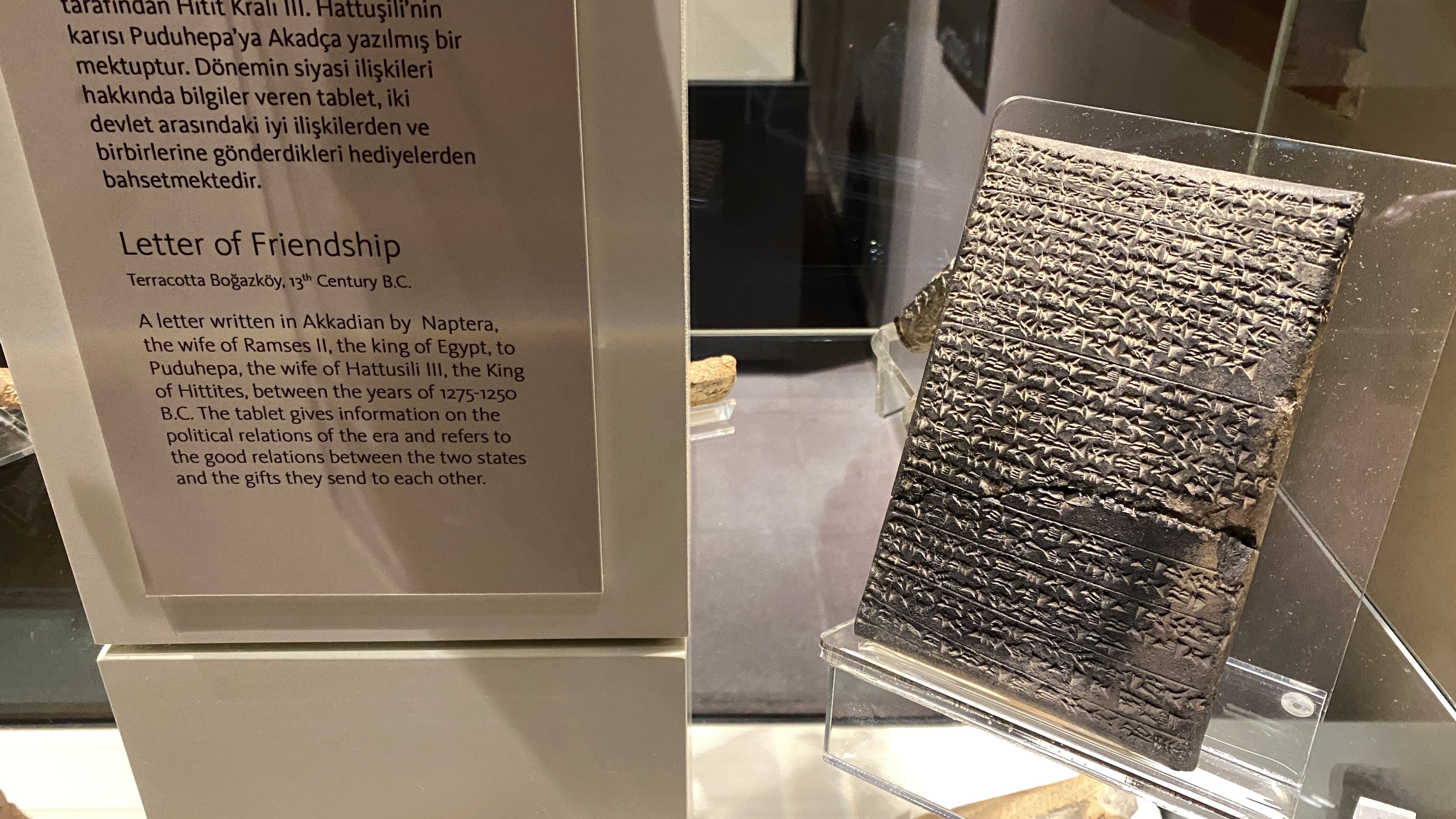
The Anatolian Civilisations Museum in Ankara showcases the rich heritage of Anatolia, displaying artefacts from the Palaeolithic Age through the Hittite, Phrygian, Urartian, and Roman periods. Housed in beautifully restored Ottoman buildings, the museum offers a fascinating journey through thousands of years of history and is considered one of Turkey’s finest archaeological museums.
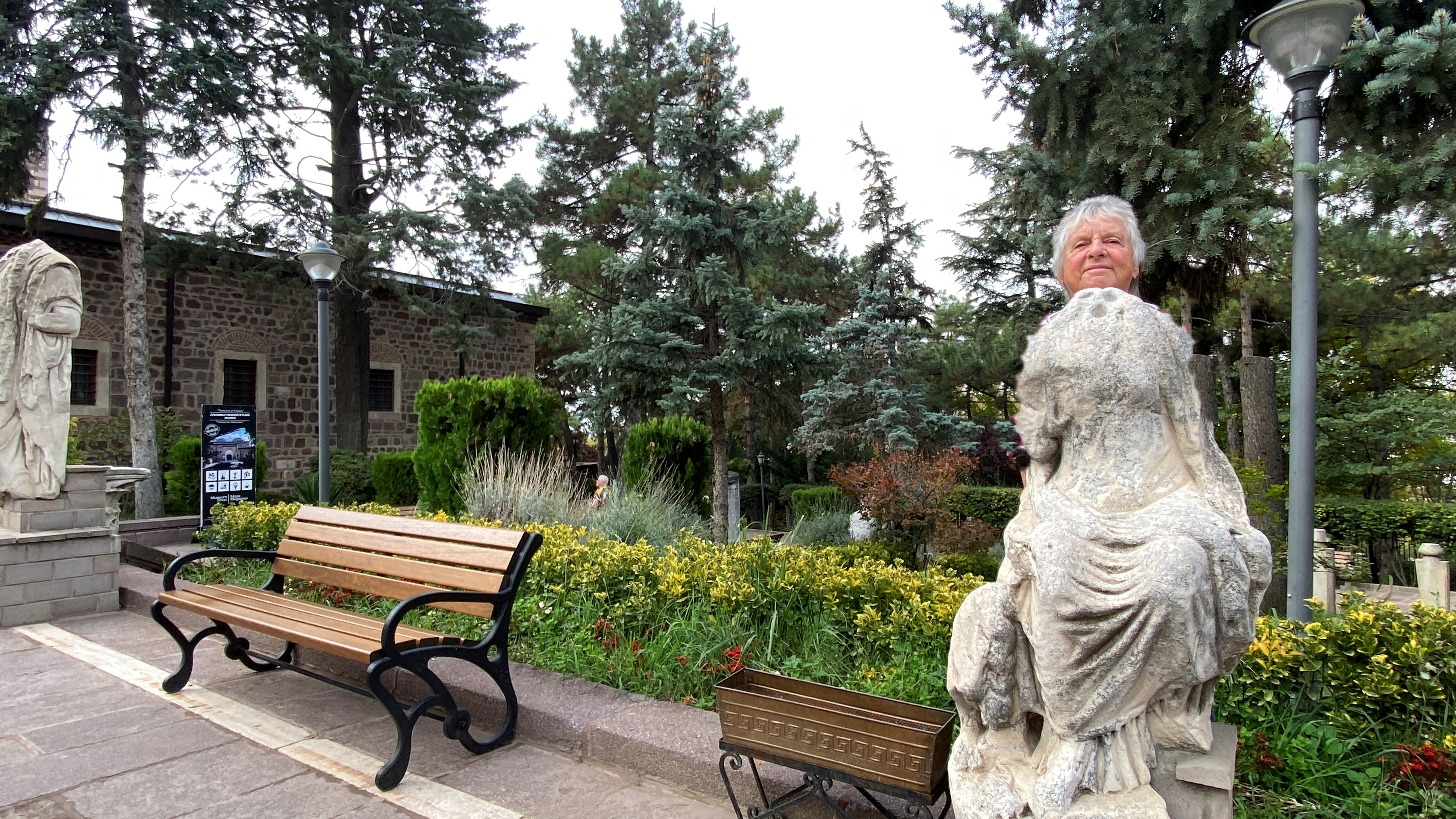
This humble exhibit is the famous "Letter of Friendship" displayed in the museum.
It was written by Queen Nefertari, the wife of Pharaoh Ramesses II of Egypt, to Queen Puduhepa, the wife of the Hittite king Hattusili III.
The clay tablet, written in Akkadian, the diplomatic language of the time, dates from around 1275-1250 BCE and was discovered at Hattusa, the Hittite capital. It reflects the friendly relations between Egypt and the Hittite Empire following their peace agreement and records greetings and gifts exchanged between the two royal courts.
One fragment was discovered by British archaeologists and was exhibited in the British Museum for a period before being returned
to Turkey some years ago.
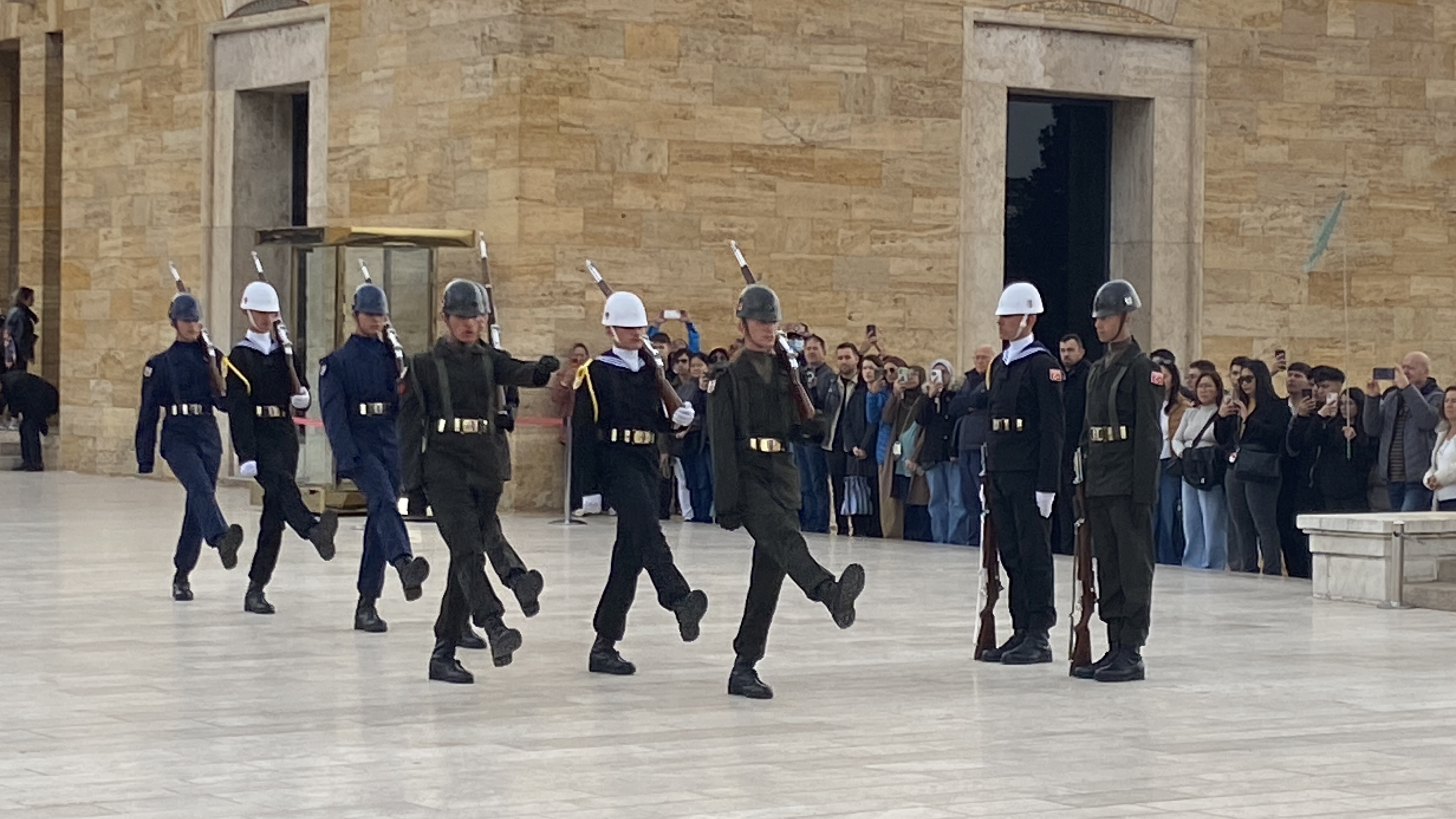
Changing the guard at the Ataturk Mausoleum.
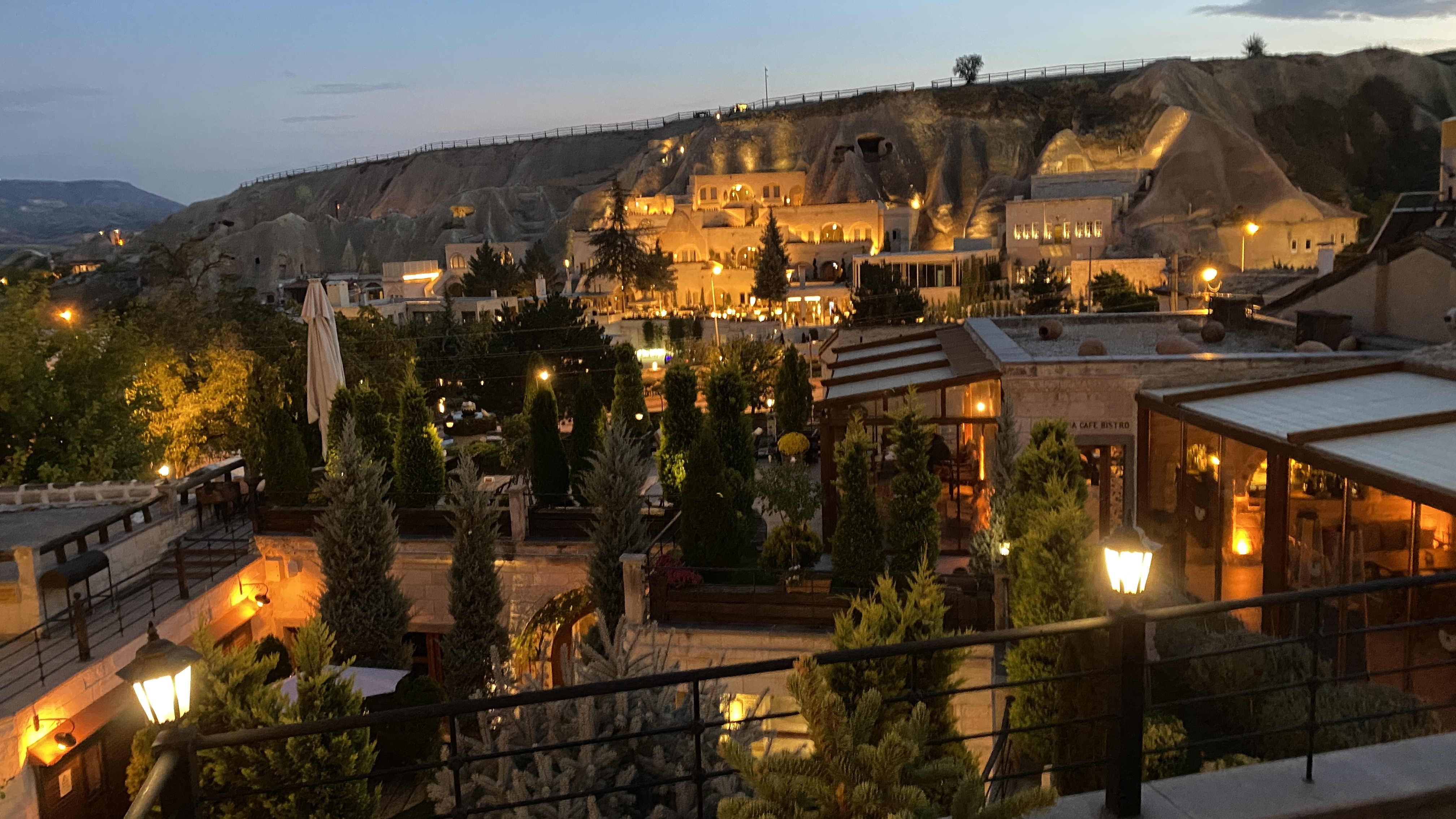
After a Sundown cocktail stop we arrive at the Utopia Cave Hotel which offers a stay carved into volcanic rock, blending traditional cave
architecture with modern comfort. Nestled among fairy chimneys and valleys, it provides panoramic views,
authentic Turkish hospitality and the region’s remarkable geological wonders. It is a maze of a place with differing rooms all over the hillside. The signage to the rooms,
reception and restaurant is a little quirky!
 Back to index
Cappadocia - 10,900 steps
Awoke before sunrise and, shortly afterwards, was reminded of one of the pleasures of travelling through the Islamic world;
the call to prayer:
God is Greatest.
I bear witness that there is no god but God.
I bear witness that Muhammad is the Messenger of God.
Come to prayer.
Come to success.
God is Greatest.
There is no god but God.
As the sound drifted across the town and echoed among the rocks, dawn seemed to arrive not with the Sun, but with a voice.
Millions of years ago, volcanic eruptions from Mount Erciyes and Mount Hasan blanketed Cappadocia with soft volcanic tuff.
Over time, wind and water erosion sculpted this rock into the distinctive fairy chimneys that characterise the region today. The softness of the tuff made it easy to carve, and local
communities created extensive underground settlements
directly within the rock. These remarkable structures provided both shelter and protection, while the churches
were adorned with frescoes reflecting the region’s rich Christian heritage.
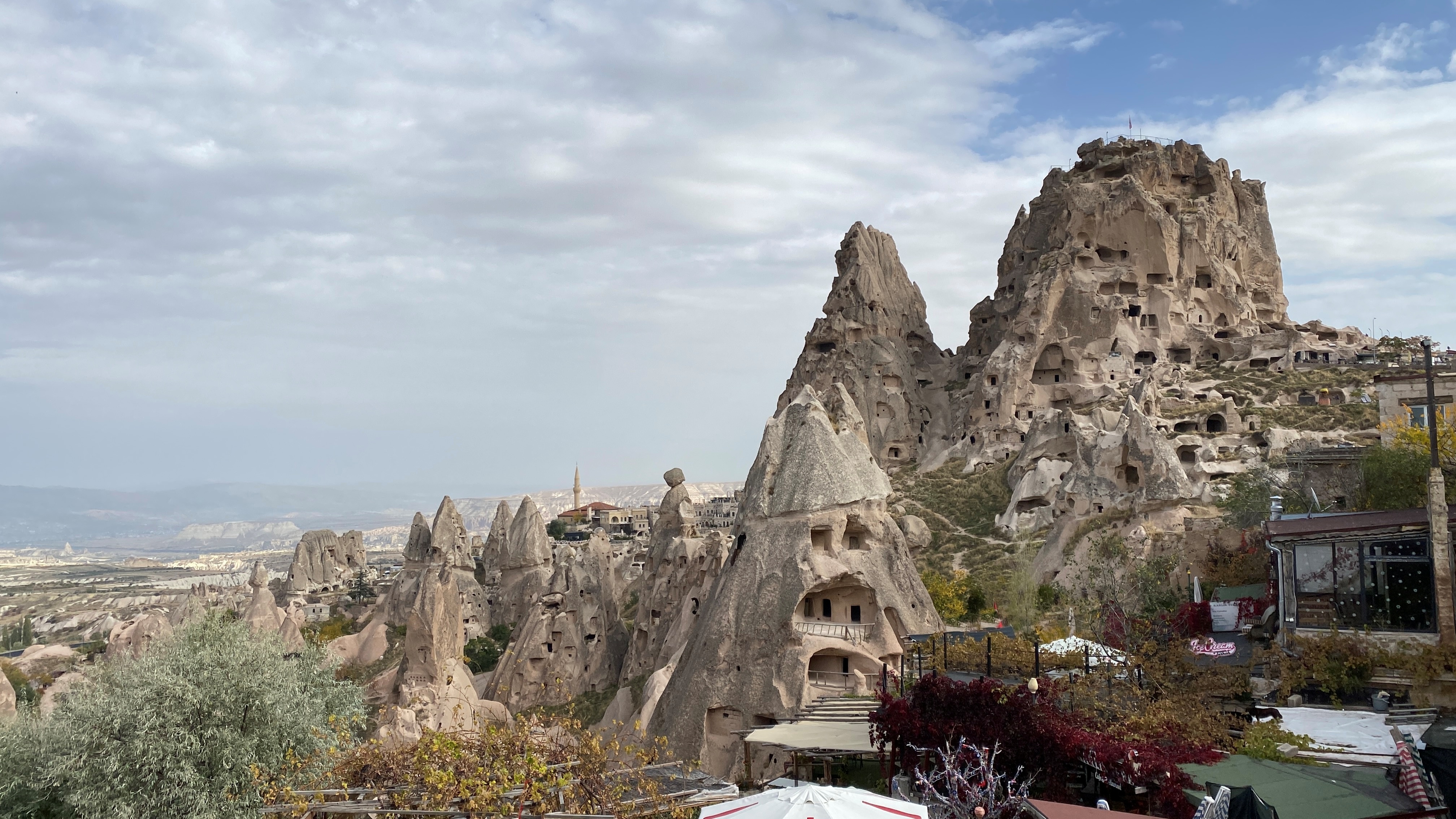
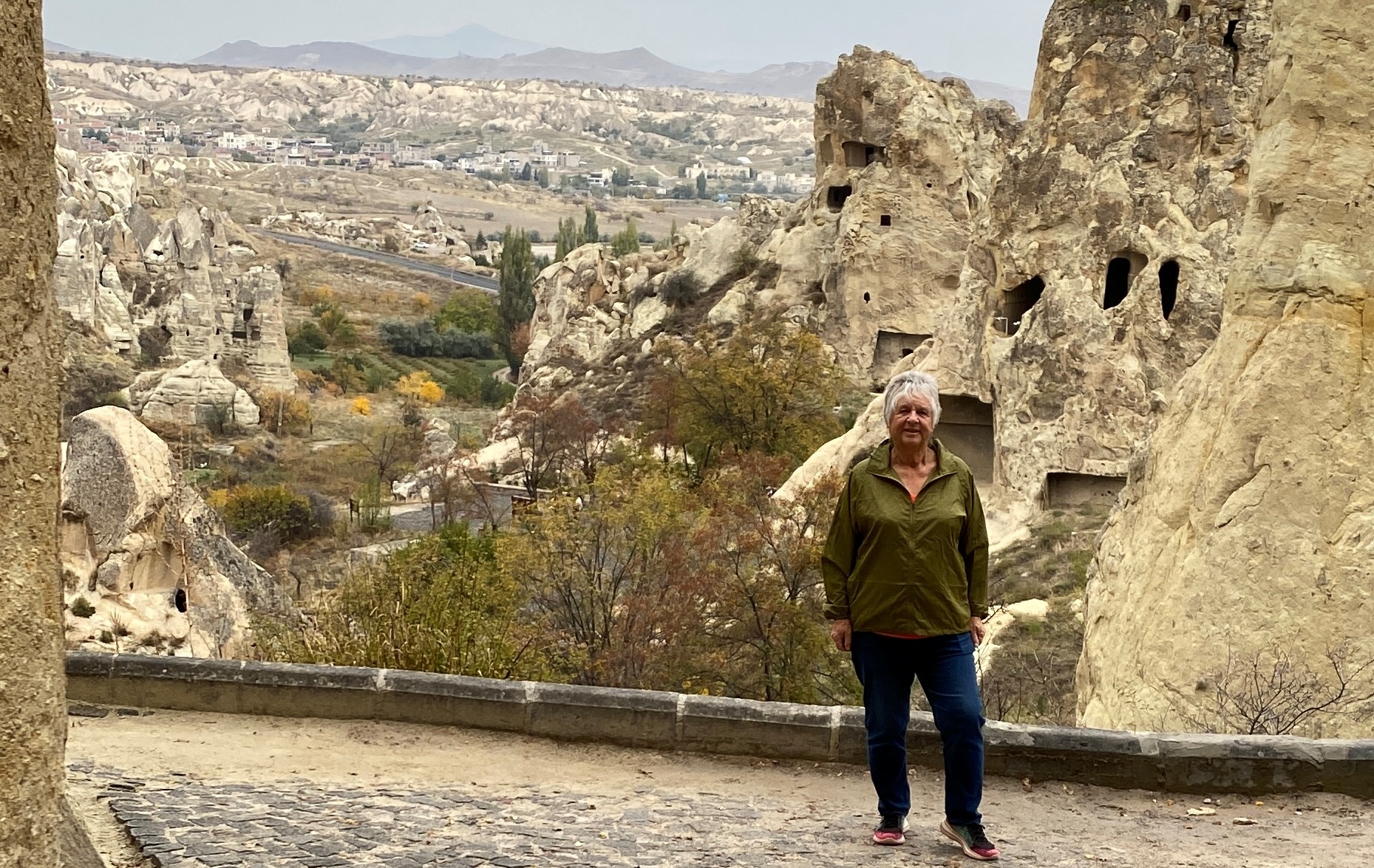
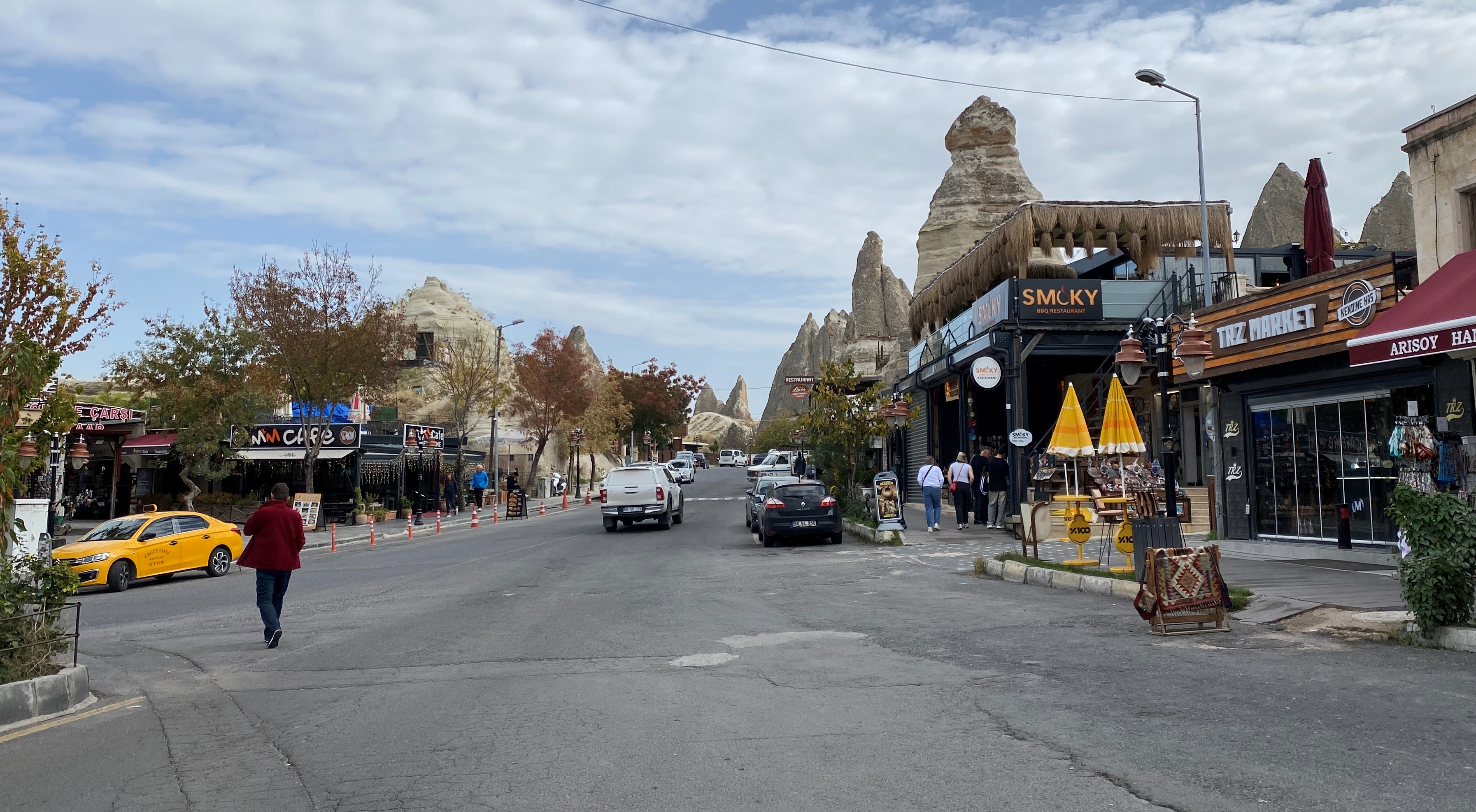
Uçhisar is a wonderful town in the heart of this region. We have time for ourselves to explore before continuing to Avanos,
a village famous for pottery and a pedestrian suspension bridge which rocks like a roller coaster. Our trip continues to amaze us and the others in our group are well travelled and have many stories to tell.
Tonight, some of our group will witness the ceremony of the Whirling Dervishes.
More than a performance, it is a sacred act of remembrance and devotion. The dervish begins with arms crossed in humility, acknowledging the unity of God. As the spinning begins, one hand reaches upwards to receive divine grace while the other points towards the earth, passing that blessing to humanity.
The turning itself is symbolic, a journey of the heart from self-centredness to spiritual awareness. Through movement,
meditation, and prayer, the ceremony invites all who observe it to contemplate love, compassion, and the soul's connection with the divine.
Back to index
Caravanserai - 6,700 steps
Theme of the day is a lot of stone floating over our heads.
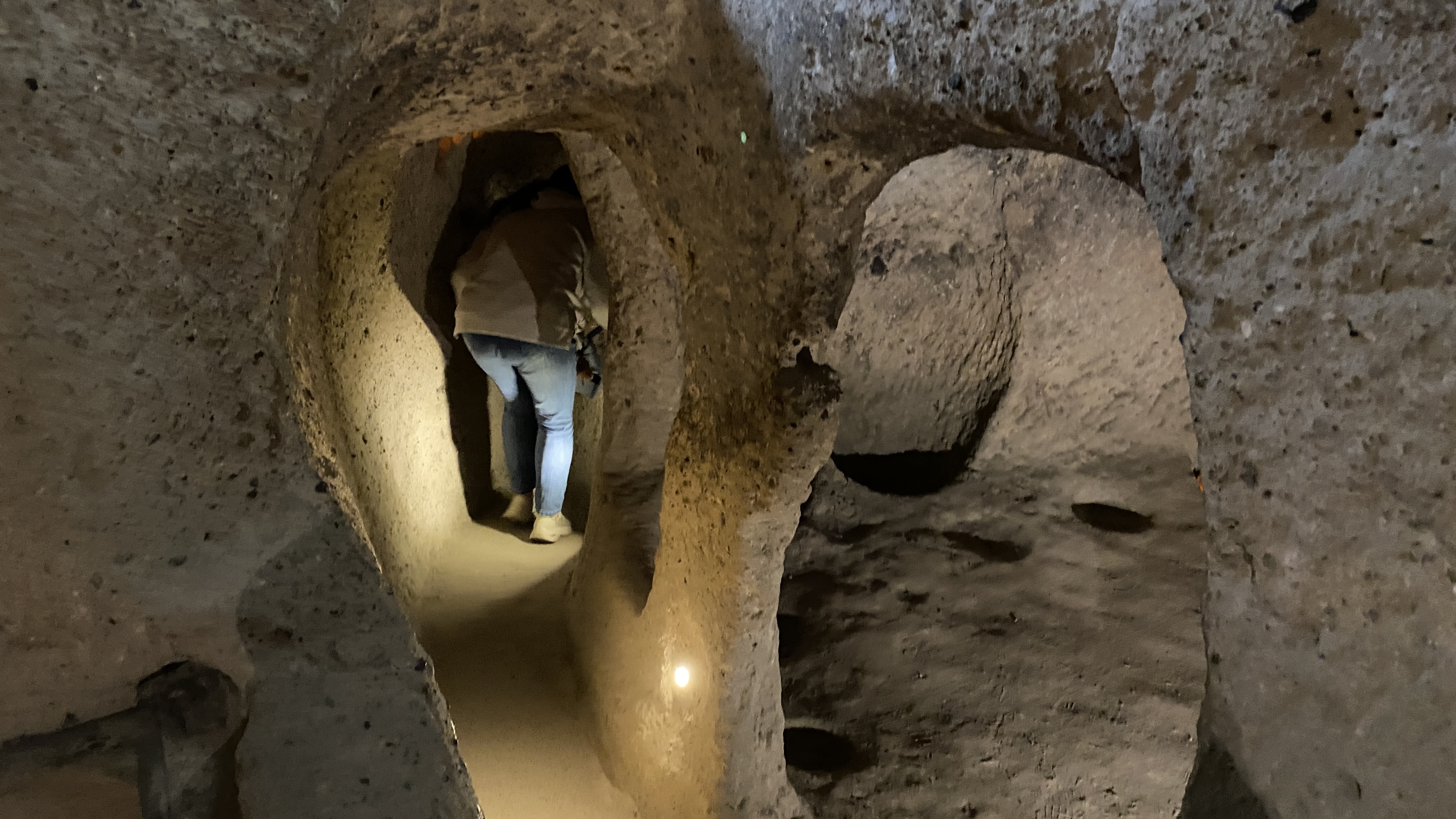
We reached level four of the Kaymaklı Underground City which was designed to support daily life for large groups of people.
Large storage spaces allowed residents to keep food and supplies for extended periods,
while sophisticated ventilation systems provided fresh air even to the eighth level.
These features enabled entire communities to survive underground when danger threatened above ground. We must say it was very comfortable.
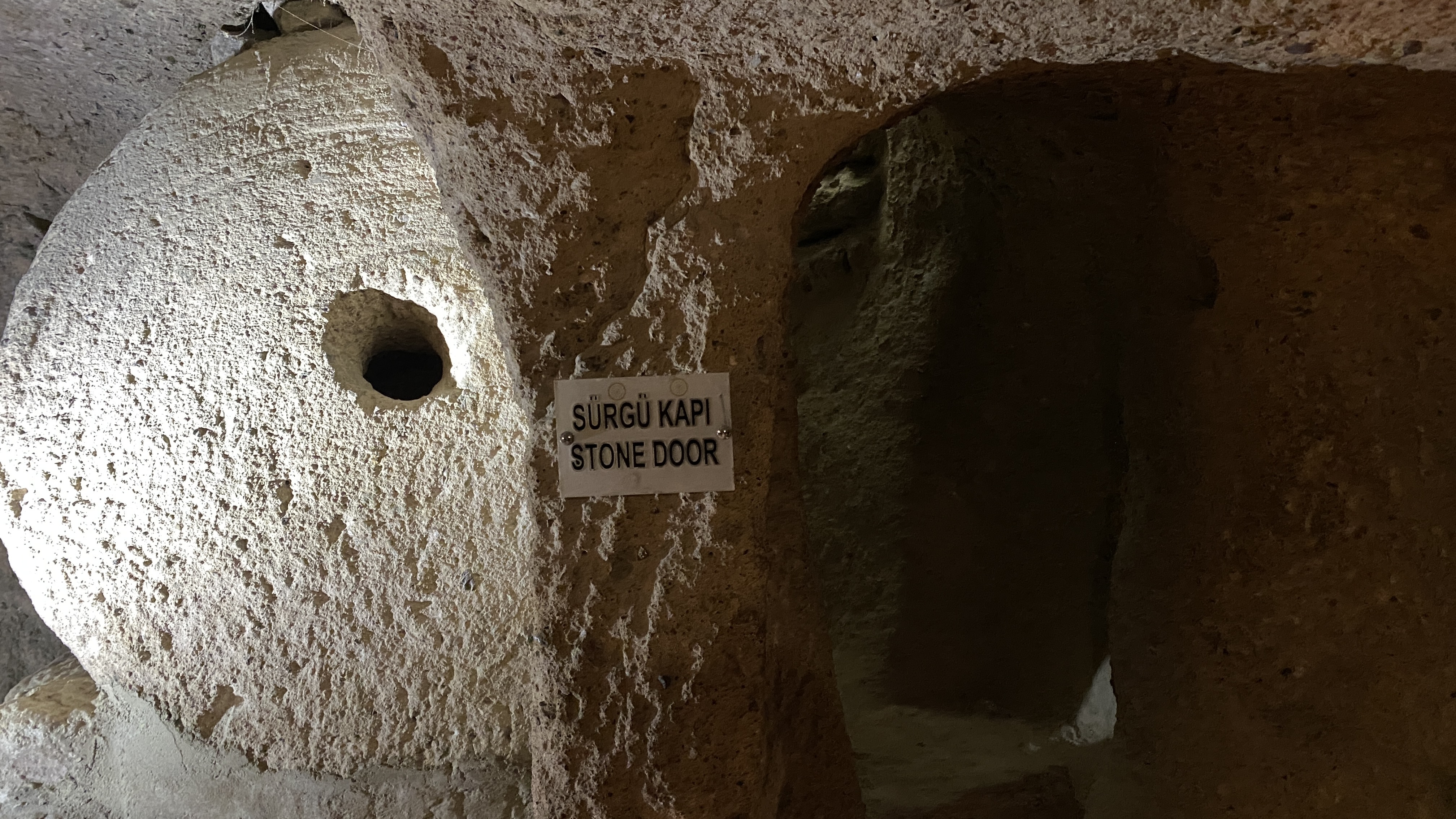
One of the most fascinating aspects of Kaymaklı is its defensive architecture. Narrow passageways limited the movement of enemies,
while massive circular stone doors could be rolled into place to seal off sections of the city.
These doors provided effective protection against attackers and helped residents defend themselves during times of unrest.
The design reflects a careful balance between security and the practical needs of everyday life.
Next stop is the Caravanserai of Sultanhani which currently has a display of carpets on in the stables.
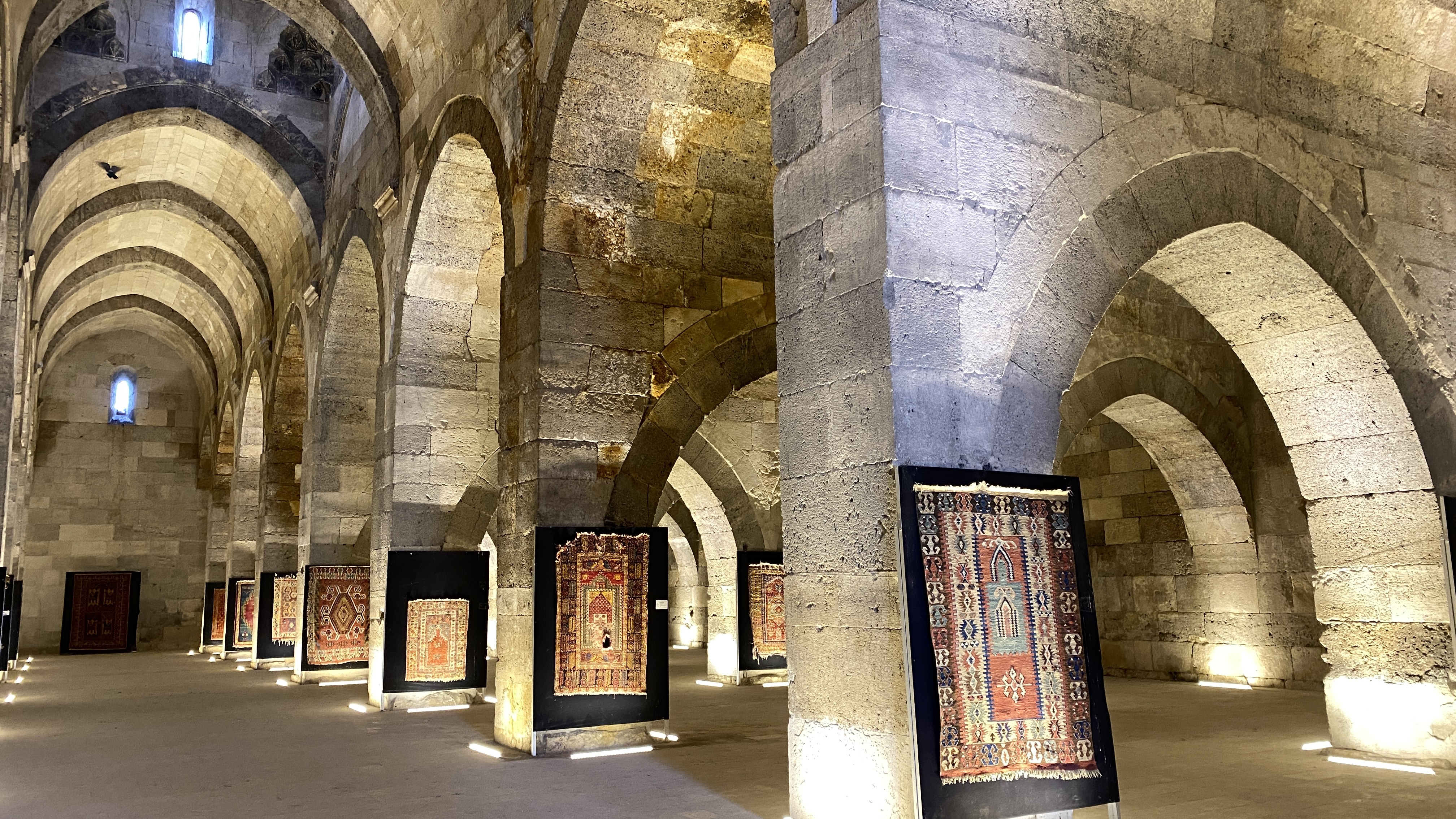
Being right here and listening to the details and explanations was magical.
In the 13th century, goods rarely travelled the entire Silk Road with one caravan. Instead, merchants moved products between trading centres,
like this one, spaced about a day's journey apart, where they were sold, taxed, and passed to other traders.
Because transport was expensive,
the most profitable cargoes were light and valuable, especially silk and spices. Camels were essential for
crossing deserts, carrying heavy loads over long distances with little water. The Mongols encouraged and protected
trade because thriving commerce increased tax revenues. However by the 16th century, expanding
maritime routes across the Indian Ocean linking Asia, Arabia, Africa, and Europe made the overland routes less profitable. Most caravanserais were then robbed of their stones by local builders.
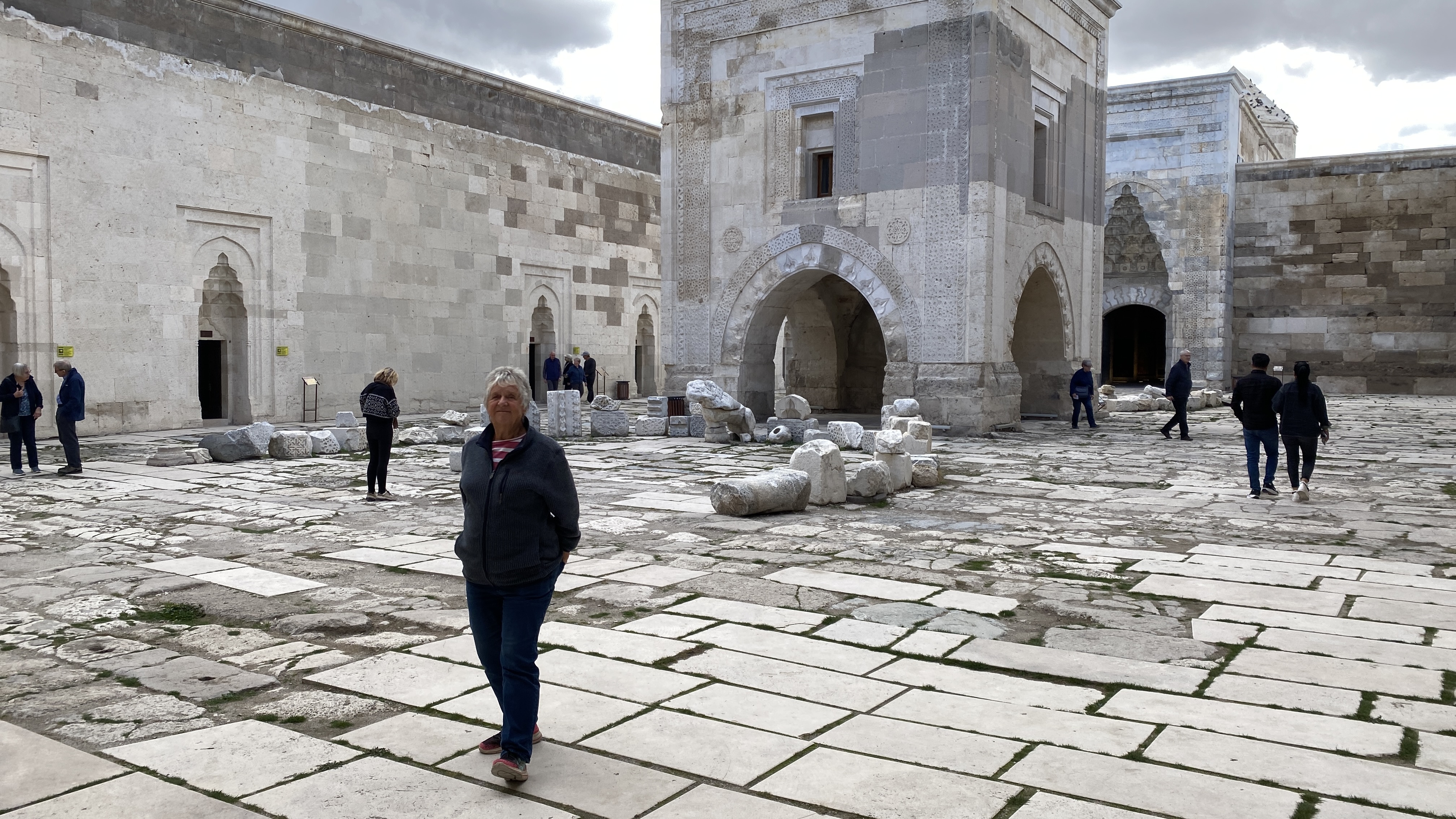
Unashamed restoration can be seen, but it has brought everything to life.
Back to index
Pamukkale - 6,640 steps
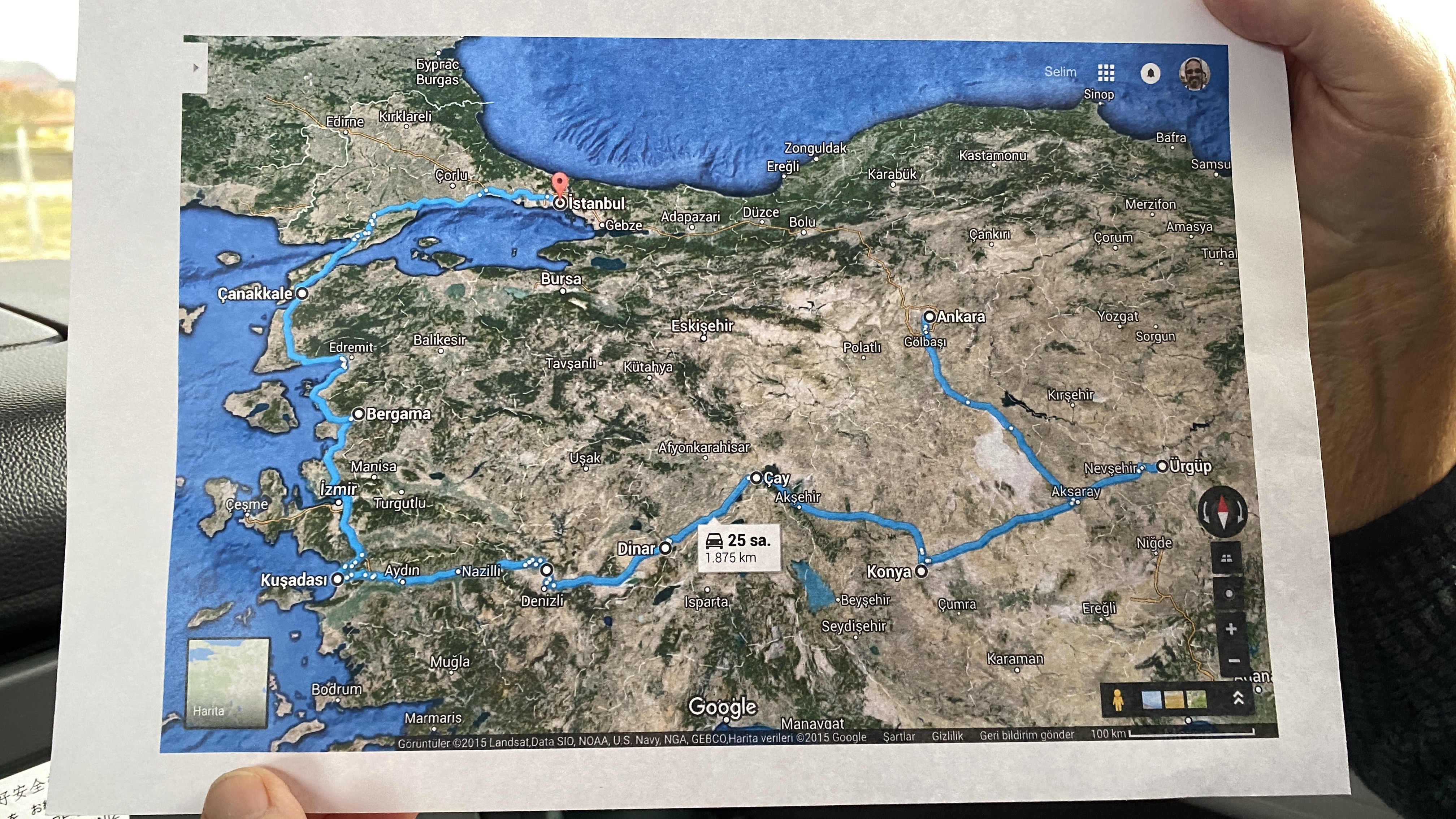
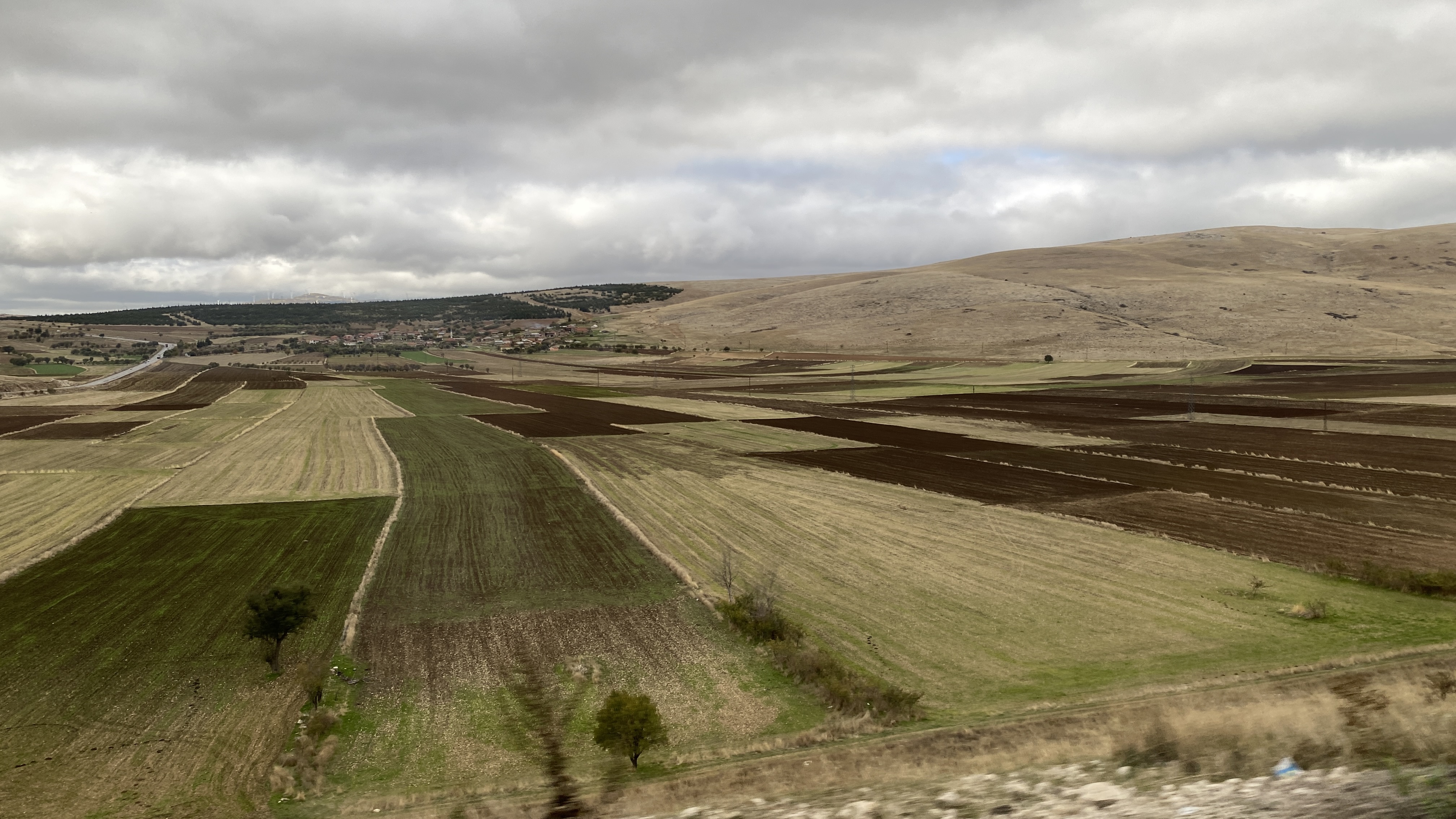
Leaving Konya, the road crosses a broad, open plateau where the horizon seems endless. The landscape is dry and spacious,
coloured by wheat fields, steppe grasses and occasional villages scattered across the plain. As the journey continues westward,
low hills begin to rise, breaking the uniformity of Central Anatolia.
Then the terrain becomes greener, with more orchards,
olive groves and cultivated farmland appearing along river valleys. Near Dinar, mountains frame the route, adding drama
and variety to the scenery. Approaching Denizli, the transformation is striking: the arid plateau gives way to a more
fertile landscape of vineyards, fruit trees and rolling agricultural land. The surrounding mountains grow more prominent,
and the climate feels softer and more Mediterranean.
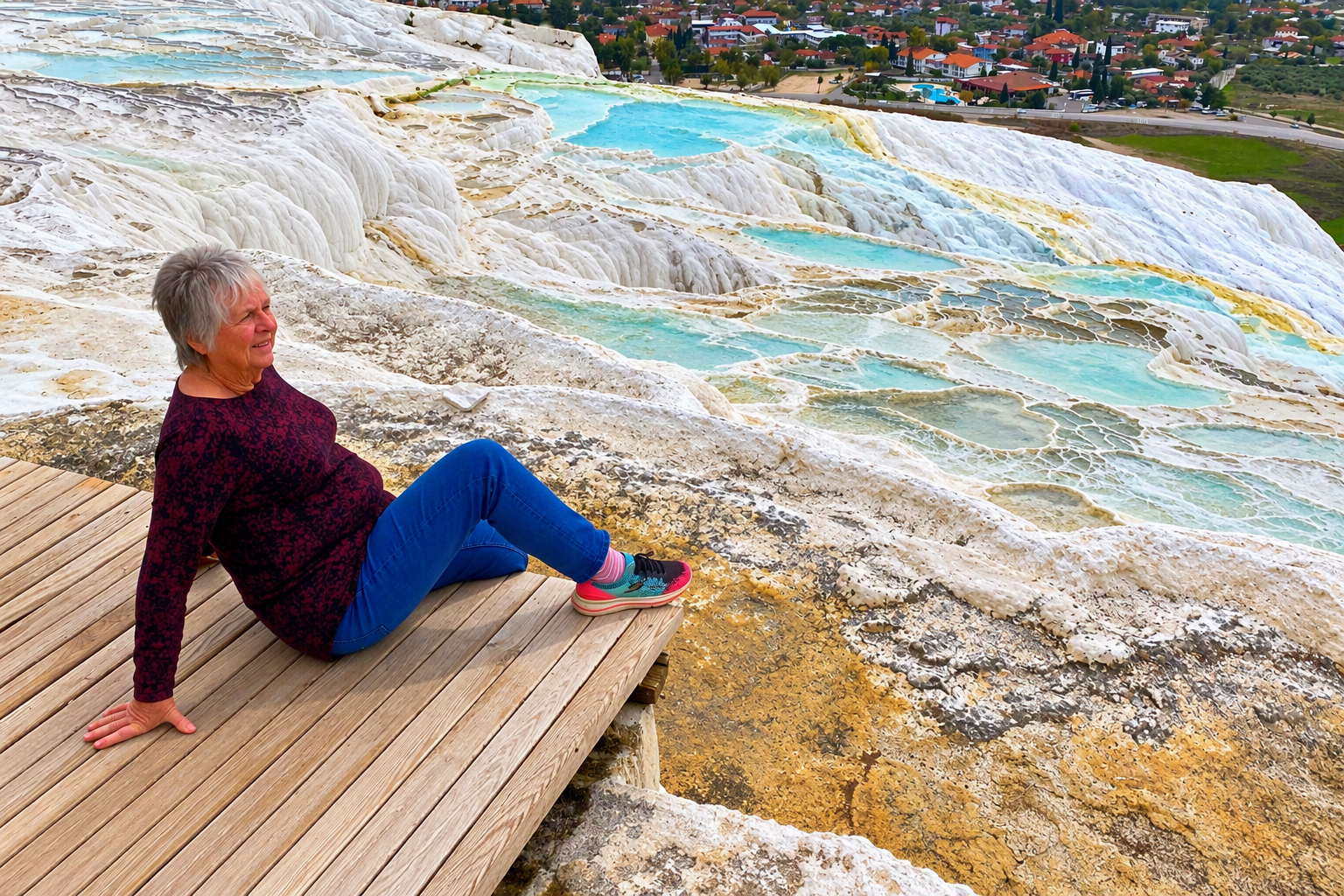
Pamukkale is a breathtaking natural wonder, where brilliant-white calcium carbonate terraces flow down the mountainside
like a frozen waterfall. Created over thousands of years by mineral-rich thermal waters, the pools form a series of
gleaming basins filled with clear, turquoise water. In the changing sunlight, the dazzling surfaces shimmer against
the surrounding landscape, creating an almost dreamlike scene.
Right next to this is the ancient spa city of Hierapolis. A fascinating glimpse into the world of Roman luxury and wellbeing.
It became a renowned destination where emperors, nobles and travellers sought relaxation.
Visitors can still wander among impressive ruins, including one of the best-preserved Roman theatres in Turkey.
Nearby, the warm mineral waters continue to bubble from the earth, just as they did two thousand years ago. Some of it even reaches our hotel.
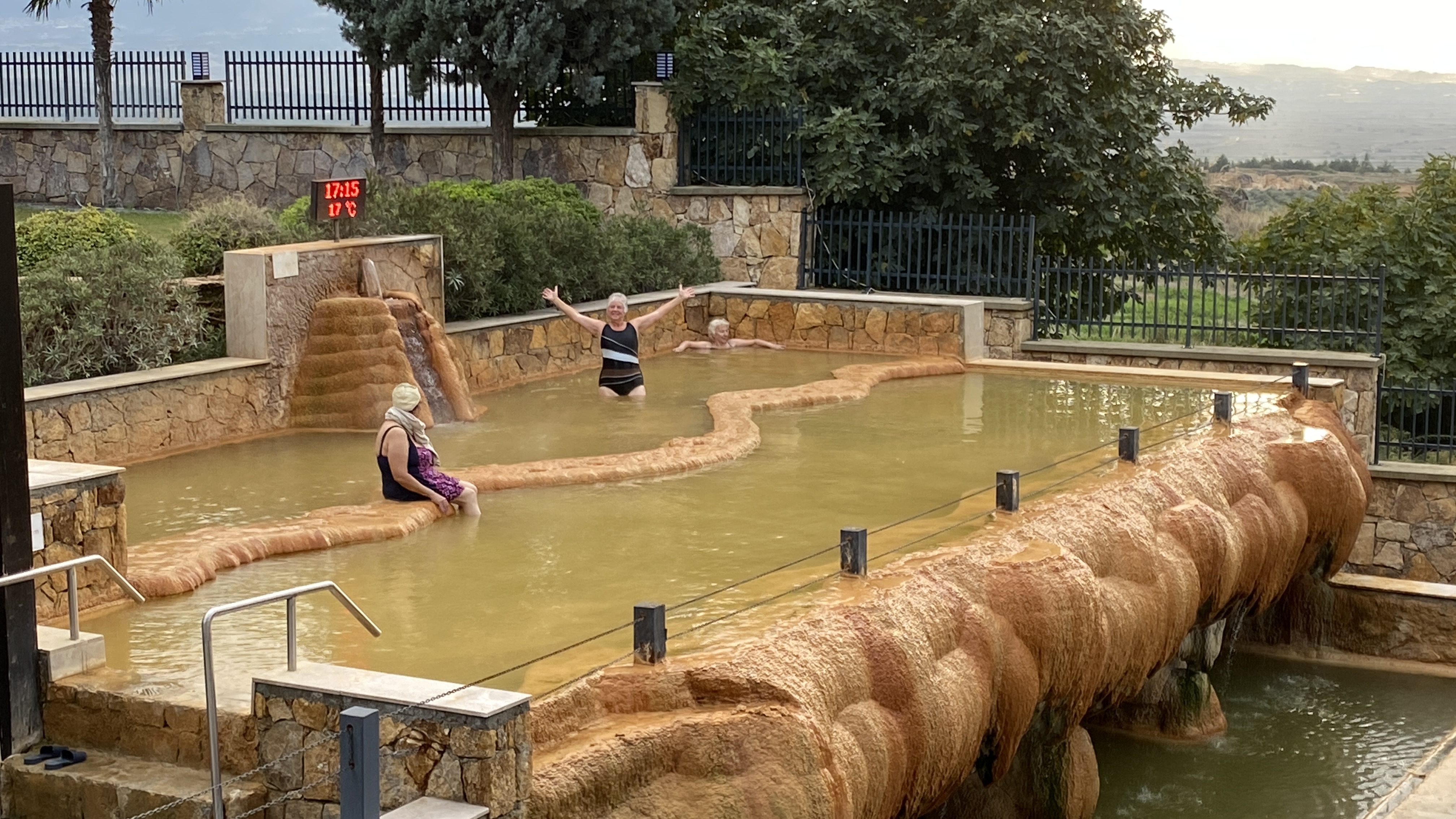
The view from our rooms.
Back to index
Aphrodisias - 10,100 steps
Nestled among the gentle hills the ancient city of Aphrodisias immediately impressed us as one of the best we had ever seen. As we walked through the site, we felt as though we had stepped back nearly two thousand years into the heart of a thriving Roman city dedicated to Aphrodite, the goddess of love and beauty.
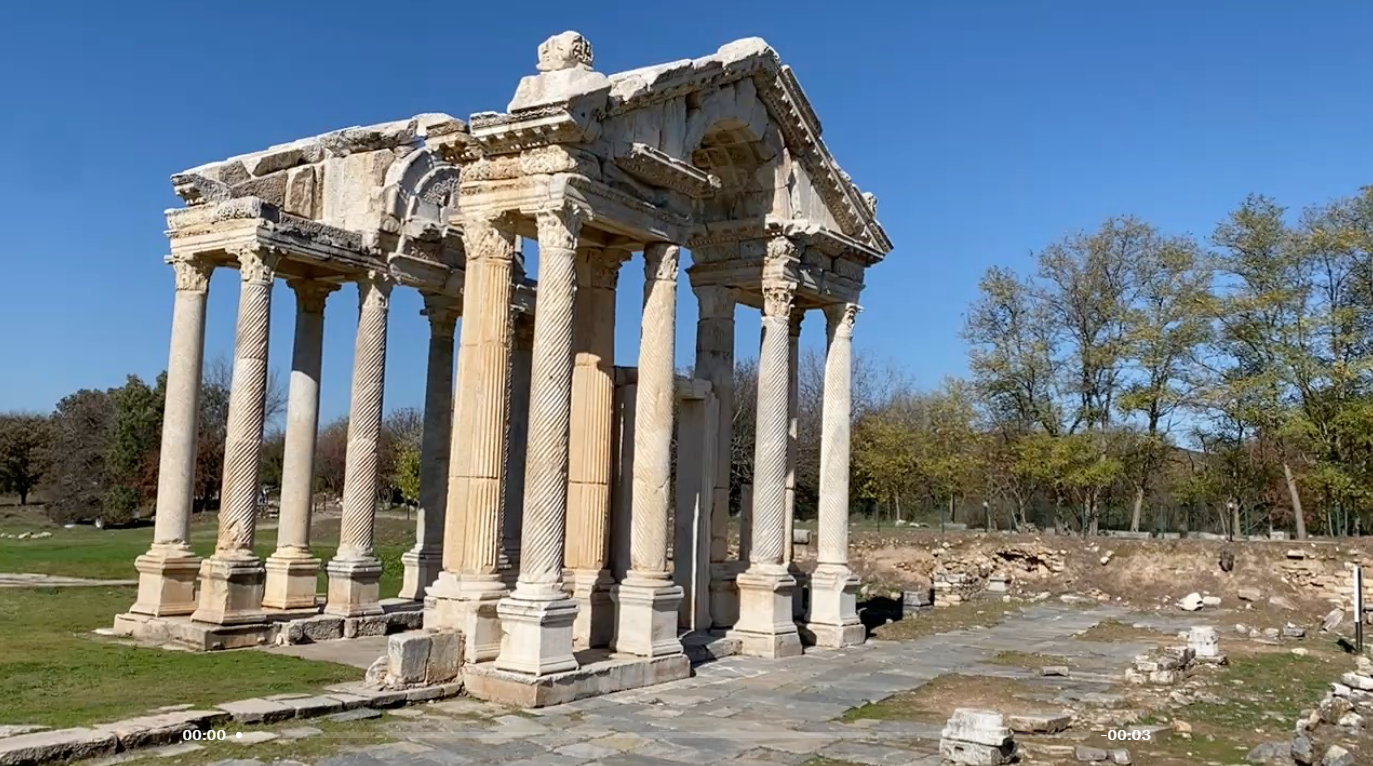
We arrived early in the morning when the crowds were non-existant and the soft sunlight illuminated the white marble structures. Our first sight was the magnificent Tetrapylon, an ornate gateway with elegant columns and intricate carvings. Standing before it, we could easily imagine the grandeur that visitors to the city must have experienced centuries ago.
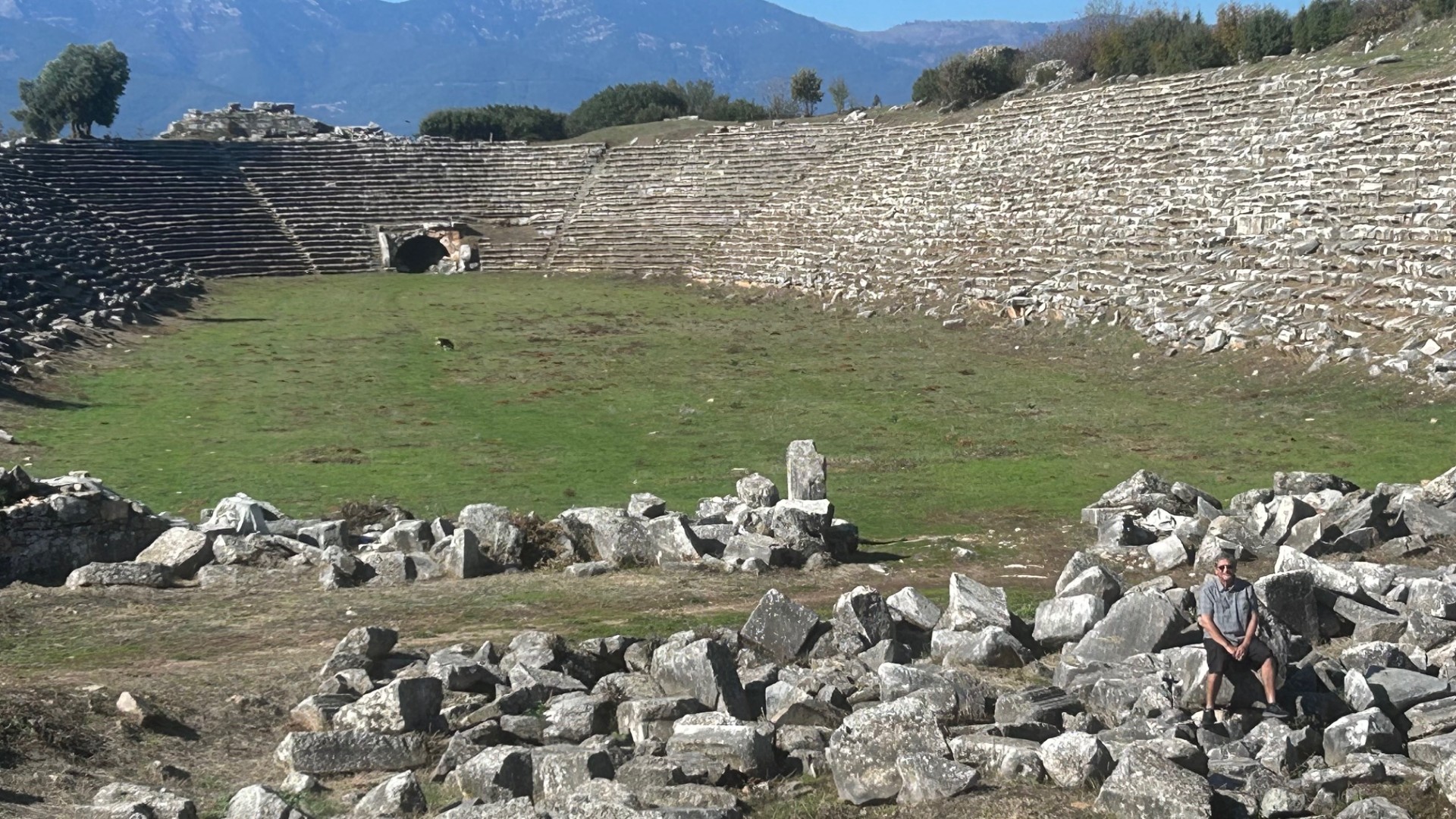
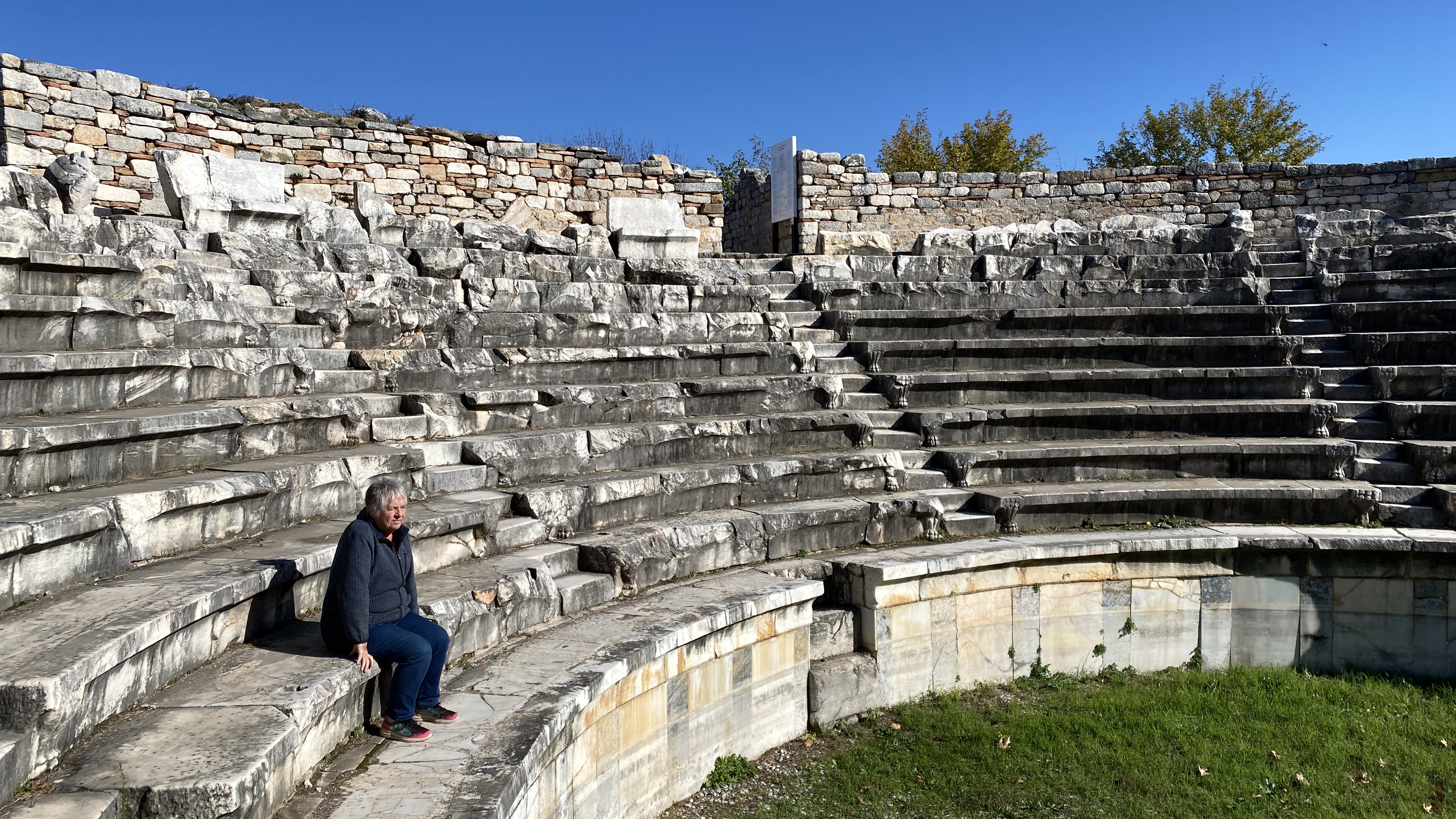
As we continued our exploration, we were amazed by the scale of the ancient stadium. One of the best preserved stadiums in the ancient world, it once held thousands of spectators who gathered to watch athletic contests and public events. Walking along its length, we imagined the excitement, cheers, and celebrations that once filled the air.
Spot Peter.
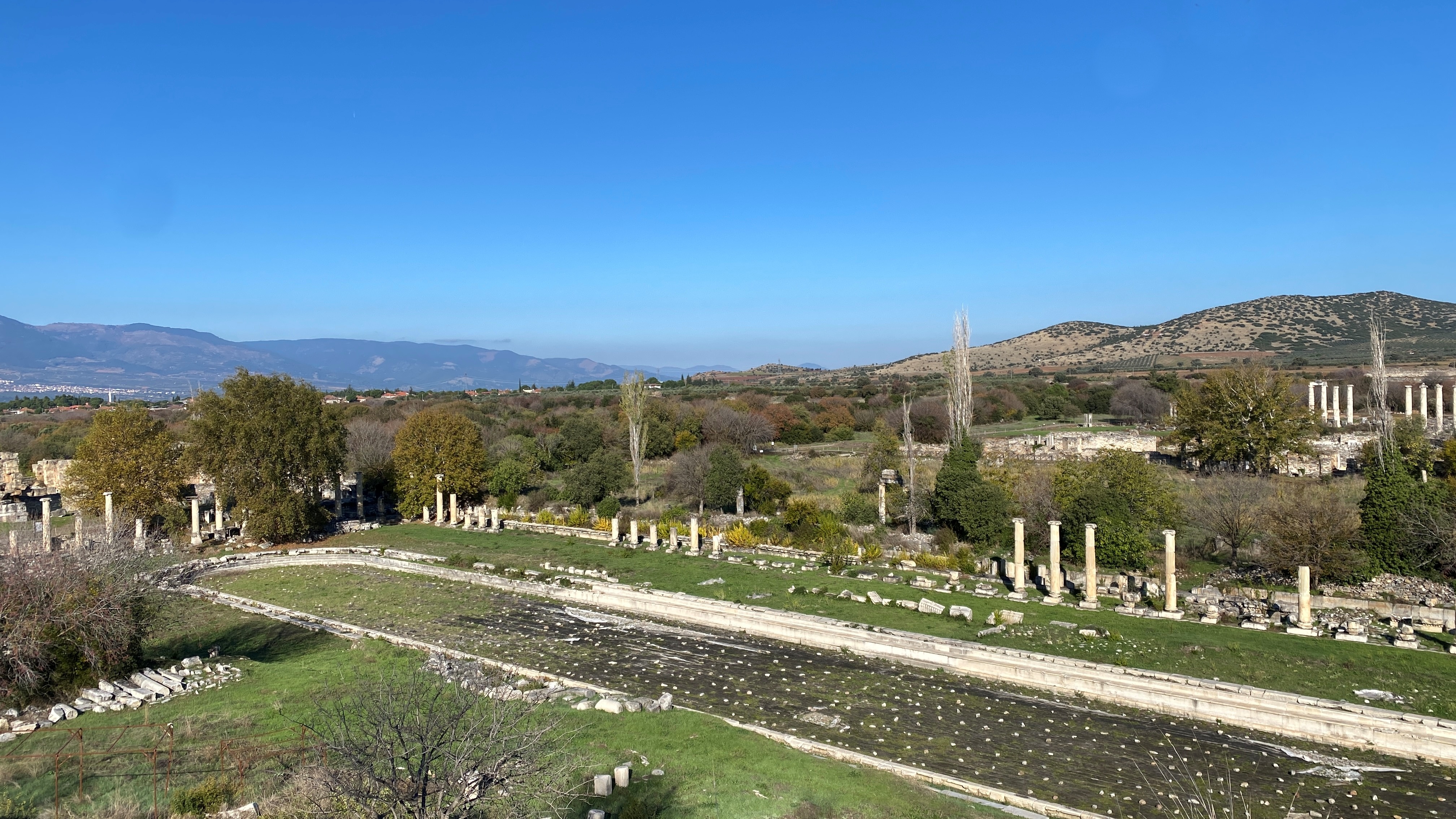
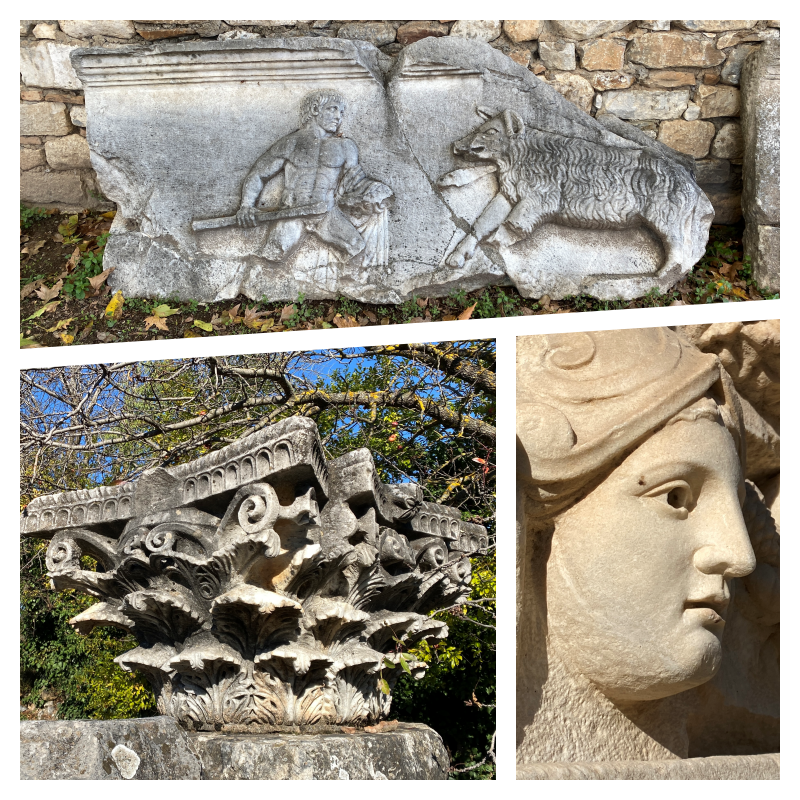
This unusual agora had a long pool of water running the length of it. Brilliant mosaics are laid on its floor,
but for now covered to protect them while a method for their display is created. The quality of the carving and ornamentation is staggering.
Deep three dimensional capitals such as this one are everywhere. The beautiful faces that looked down on the agora were all different. A renowned gladiator was buried here, although there were never any games held here. The citizens preferred to go to the theatre.
 Back to index