28th January 2026, 6am taxi, Great transfer and immigration in Dublin and on time to Miami where Virgil and Scot (our cases) also arrived. Then a taxi through the grid system, to the corner of Southwest 4th Street and Southwest 14th Avenue in Little Havana, where we discovered something like the opposite of an escape room. To enter our flat we had to pass three different key code locks, all with a different foibles and all done in twenty hours. (The entire journey, not just the locks.)
We now have some spare time before joining the Zuiderdam for our cruise calling Colombia, Panama, Costa Rica, El Salvador, Guatemala & Mexico and are both awake in good time to watch the Sunrise at 7:05. It will be interesting to see where we are in daylight. Then it is the Hoponhopoff for us and bring on the Dunkin Donuts.
Meanwhile I searched for 'Miami Advice', all I got was lyrics to an AI song and Sorry Kimya, that song needs a lot more work.
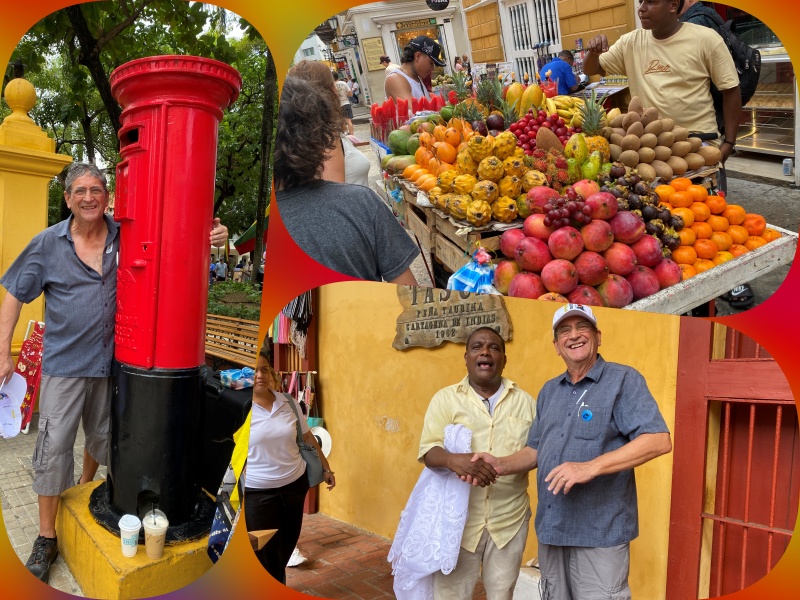
This is our block, we are on the ground floor. Little Havana is Miami’s lively Cuban time capsule, where the 1960s never really ended. When Fidel Castro took over Cuba, thousands of Cubans packed their bags, sometimes literally just a bag and headed for Miami, transforming a quiet neighbourhood into a tropical explosion of music, politics, and pastries. Calle Ocho quickly became the unofficial capital of Cuban exile life.
While America was wrestling with big ideas about freedom and equality the Cuban immigrants were busy rebuilding their lives. The result was a shortage of jobs leading to unrest and a neighbourhood that feels like a heartfelt love letter to the island they left behind, mixed with Miami flair.
We did the whole bus route twice, hopping off for Lunch and to walk along Ocean Drive and phoning Chris to say happy birthday. Ocean Drive is Miami Beach’s neon soaked runway, where pastel Art Deco hotels pose and never age. Built in the 1920s and 1930s, these geometric, sherbet coloured buildings were designed to radiate optimism.
We crossed all of Miami’s bridges connecting the mainland to Miami Beach. All three cross the same beautiful expanse of water, but beauty doesn’t cancel out gridlock that builds during the day. From them you see the towers of flats that dominate the skyline and the hundreds of vultures riding the thermals they generate. At ground level, delivery robots go about their business, crossing roads at the right time and giving way to pedestrians.
I guess if he gave way to every robot delivery he would never get the job done, but all the same, somebody is waiting for their bagel and we watched this for about three minutes wondering if any more would come along and line up. We estimated he would be there another twenty minutes.
The Frost Science is an interesting place. This is the aquarium, above and below. There is a walk in aviary as well. The planetarium show was very spectacular, life on Earth, carbon cycle blah blah. But degenerated into a gloomy forecast of sea level rising and global warming.
A very nice place with great food and portion control. Like us, some of the other diners were very fashion and body conscious. The best way to describe the vibe on the other tables is to search YouTube for JAY-Z - Big Pimpin'.
PS, the pancake stacks here are actually the size of a birthday cake and have cream on the side.
I will put a link to Cruisemapper on each page which will show our live location. CruiseMapper is generally regarded as a legitimate and widely used ship‑tracking website, and there are no reports of it being unsafe or malicious. It’s commonly referenced by cruise enthusiasts, maritime hobbyists, and travel forums.
🎸 Now turn up the volume, click play and Bossa Nova with us. 🎹
A hush before the Sunrise as the World begins to glow,
The ship drifts out of morning like a story starting slow.
The air is full of promise, of horizons yet unseen,
And Peter and Liz breathe in the spaces in between.
Oh, Peter and Liz on this wandering tide 🌊,
Hearts beating together as the waters divide ❤️.
Side by side they travel 🚶♂️🚶♀️,
Where the great worlds meet 🌍.
Two souls in motion, one rhythm, one beat 💫.
They dream of drifting landscapes where the sky dissolves in blue,
Where islands rise like whispers and the day feels soft and new.
Time loosens all its edges as the ship slips through the light,
And wonder weaves around them in the stillness of the night.
Oh, Peter and Liz on this wandering tide 🌊,
Hearts beating together as the waters divide ❤️.
Side by side they travel 🚶♂️🚶♀️,
Where the great worlds meet 🌍.
Two souls in motion, one rhythm, one beat 💫.
The Earth opens like a doorway carved by ages long ago,
A passage shaped by dreaming and the will to let things flow.
They drift toward distant oceans where the far horizons call,
And feel the world expand around the love that holds them all.
Oh, Peter and Liz on this wandering tide 💕,
Hearts beating together as the waters divide 💗.
Now the wide world shimmers in a soft, unfolding gold 🌹
A journey shared forever, a love in stories told.
Pre-dawn position check 21N 75W, Sailing ESE. My plan is to hang a right and take the Windward Passage between Eastern Cuba and Northwestern Haiti. Meanwhile, at a beautiful table starboard side, PBJ toast for breakfast while Cuba passes by on the horizon.
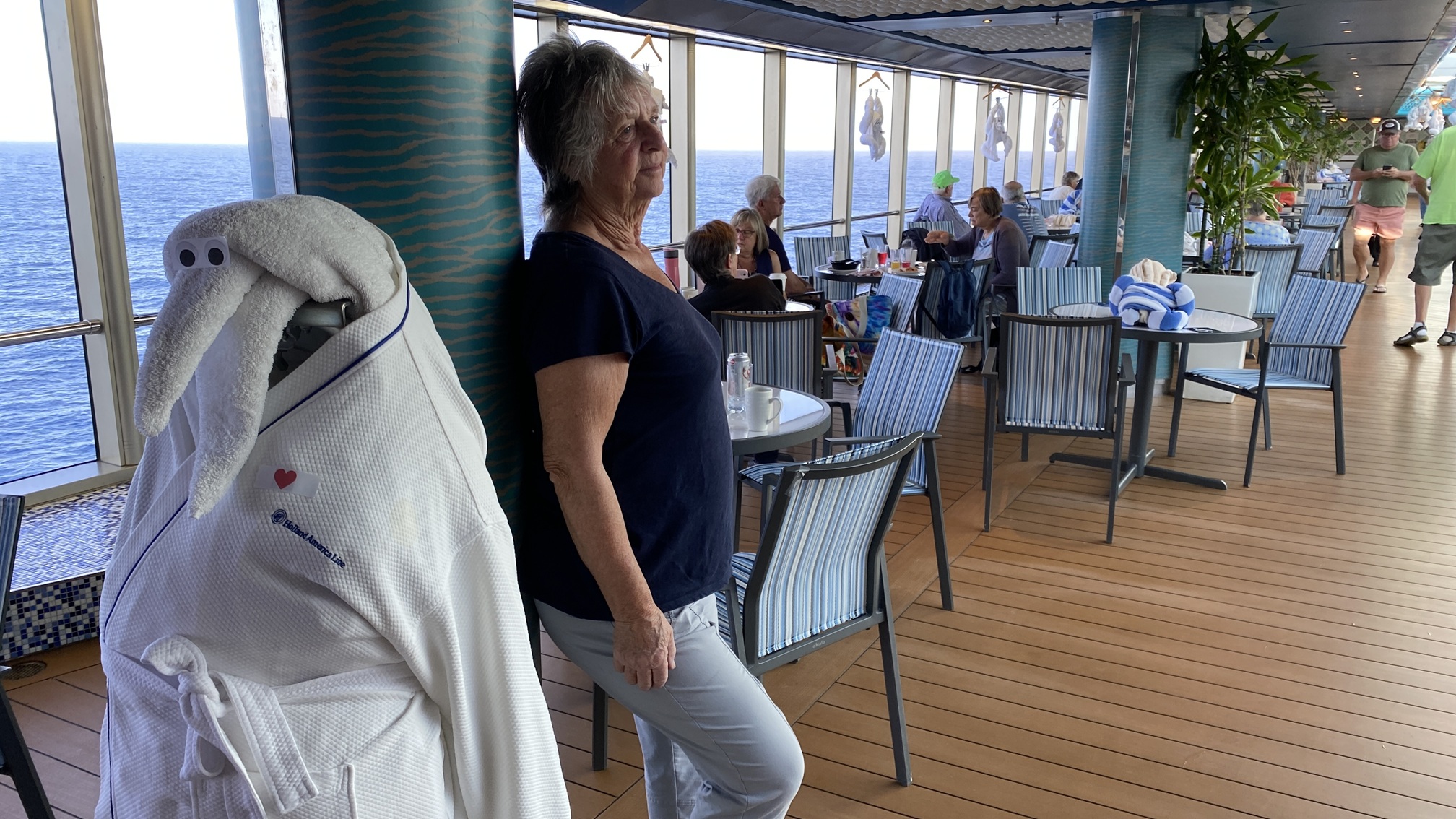
It is wonderful to unpack and to have a base for the next two weeks. For noobs like me, it is a steep learning curve to find the hacks. Thanks to James and Ollie for advice before we left. Other seasoned voyagers are pleased to share too. Failing that, the technology aboard works like a charm. It covers information for everything. One of the best is the carpet in the lift which simply says 'Sunday'.
I visited the game room, nonchalantly played pawn to king four. Nothing happened immediately so I visited the bar for a Kombucha. When I returned to the board my move had been 'tided up' and the pawn was back on king two.
We have signed up to build a boat that will be sea trailed in the jacuzzis on the last day at sea. We can use things we find on board or on an excursion. Using certain items; TVs, life jackets and cabin stewards are specifically prohibited. Criteria for judging; cargo capacity, back story, special features and crowd response.
Sunrise position check N17 W74. You can see we are crossing the Zuiderdam's path from its previous voyage on 20th January. We wave goodbye to our close companion, 'Carnival Horizon', as it turns Southeast for the next four days visiting Aruba, Bonaire and Curacao in quick, but not alphabetical, succession. Meanwhile after breakfast daily Tai Chi.
On the deck where the trade winds blow free,
Liz shifts through peng, lü, and soft ji,
Her silk reeling's bright,
It's a beautiful sight,
She’s a golden waveform in tai chi.
The process of going ashore was super efficient. Our guide was a pleasure to listen to. The early rain cleared, the heat and humidity turned up. Free time here and there, we got a coffee in a local shop and that was very special nutty sweet medium roast.
There was no litter at all in this city, those two cups were our coffees, set down for a moment. Liz negotiated a hard deal on a new Croquet hat for me. Everything was clean and the people fun to be with.
The history story is of French, English, Dutch and lastly Spanish invasions. The fort the Spanish built stopped any further transfers, for some time. We visited it. In the middle of all this, Francis Drake visited, took everything for himself and burned the city to the ground before leaving. Other privateers also used it as a base. All the colonists used Africans as slaves. The story is the Africans developed braiding their hair. This could be used as covert messaging, or even as a map. It could also be used to hide small objects, perhaps an emerald. Even today at ports, they may search travellers' hair.
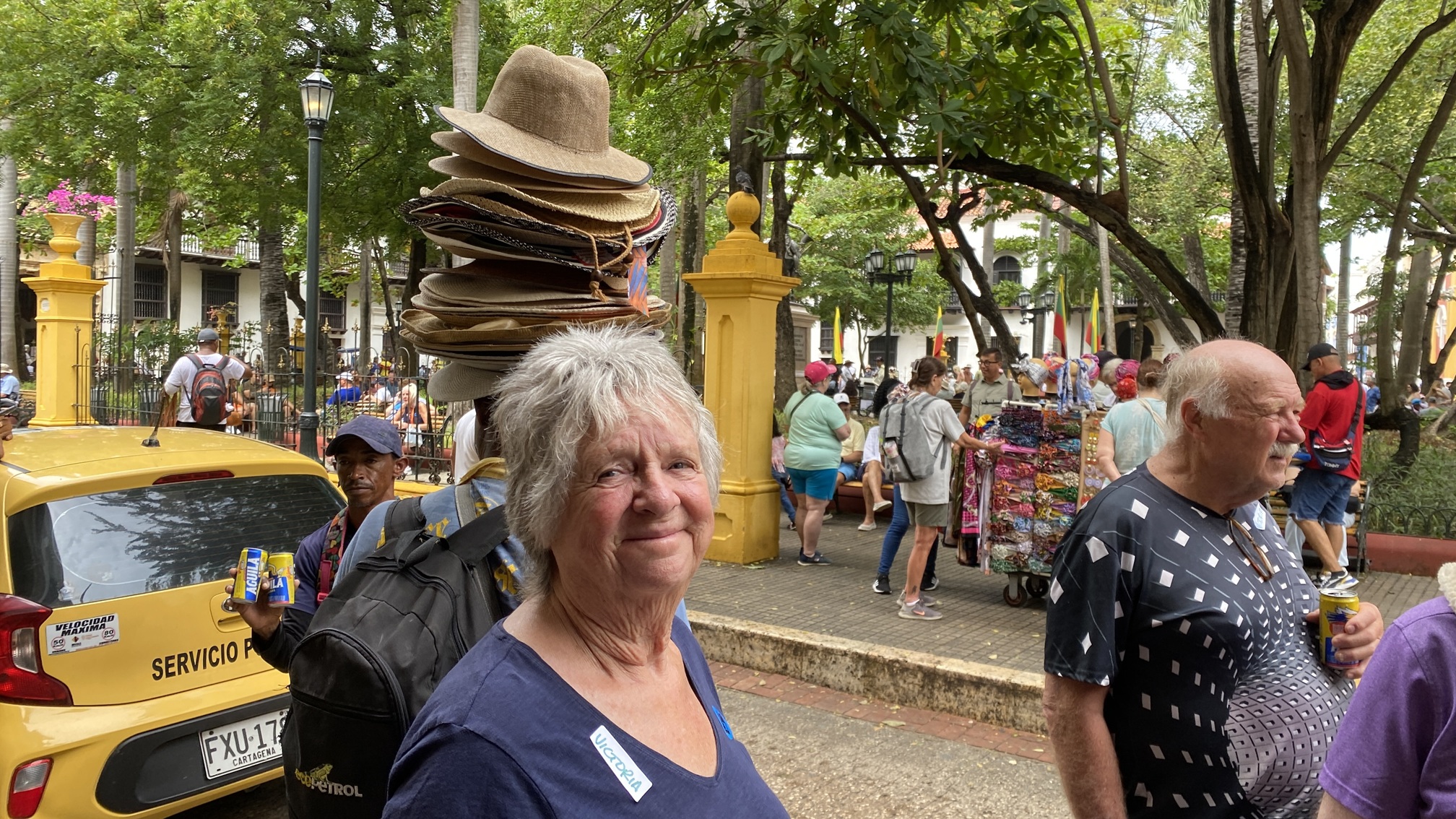
Now, rather than try to collect income tax, the country relies completely on VAT and selling hats.
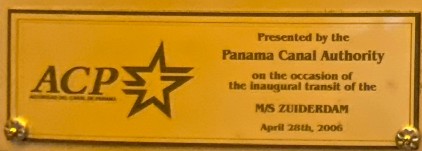
Our tour manager gave a brilliant presentation about the Panama Canal this afternoon. The history of building, the politics of the American Zone until Carter and the logistics of running it and improving on the efficiency, especially with the new locks and the birth of the Neo-Panamax class of ship with a capacity of 16,000 containers. We have set sail and the ship needs to get there on time for our booked slot, we are going fast. The cost for our ship to go through is $440,000 or $30 per passenger.
A surprise to me was finding out about the pilots on the canal. I will write more tomorrow.
To become a Panama Pilot is to join the most elite maritime order there is. These are the mariners who take command of the giants and guide them through the unforgiving thin corridor.
Candidates arrive already seasoned chief officers, navigators who have crossed oceans. Yet in Panama, they begin again. The Understudy Program immerses them in the Canal’s hidden physics. The pull of freshwater on a Panamax hull, the way wind accelerates between hills, the choreography of tugs and locomotives, the emergency protocols that leave no room for hesitation.
Then comes the Pilot in Training phase. Under the gaze of full pilots, trainees take the helm of real transiting vessels. Small ships at first, then tankers, container behemoths, and finally the towering Neopanamax class. They learn to feel the ship as an extension of themselves, to read currents like a second language, to make decisions measured in inches and seconds.
Between voyages, they enter the Simulation, Research, and Maritime Development Center of the Panama Canal Authority (SIDMAR). Here storms, failures, and near disasters are conjured until instinct becomes mastery.
Only after months of relentless testing do they earn the title Panama Canal Pilot.
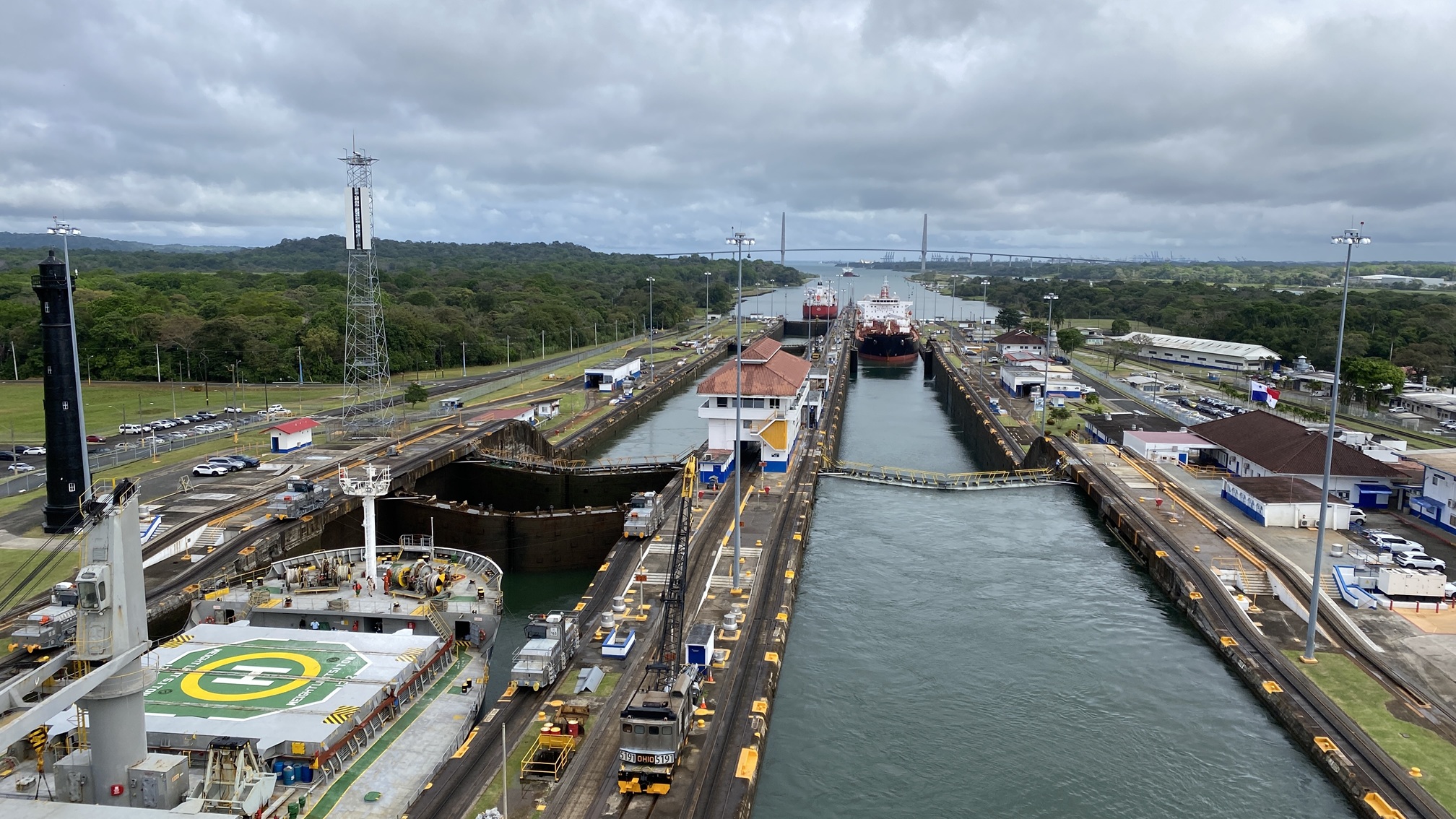
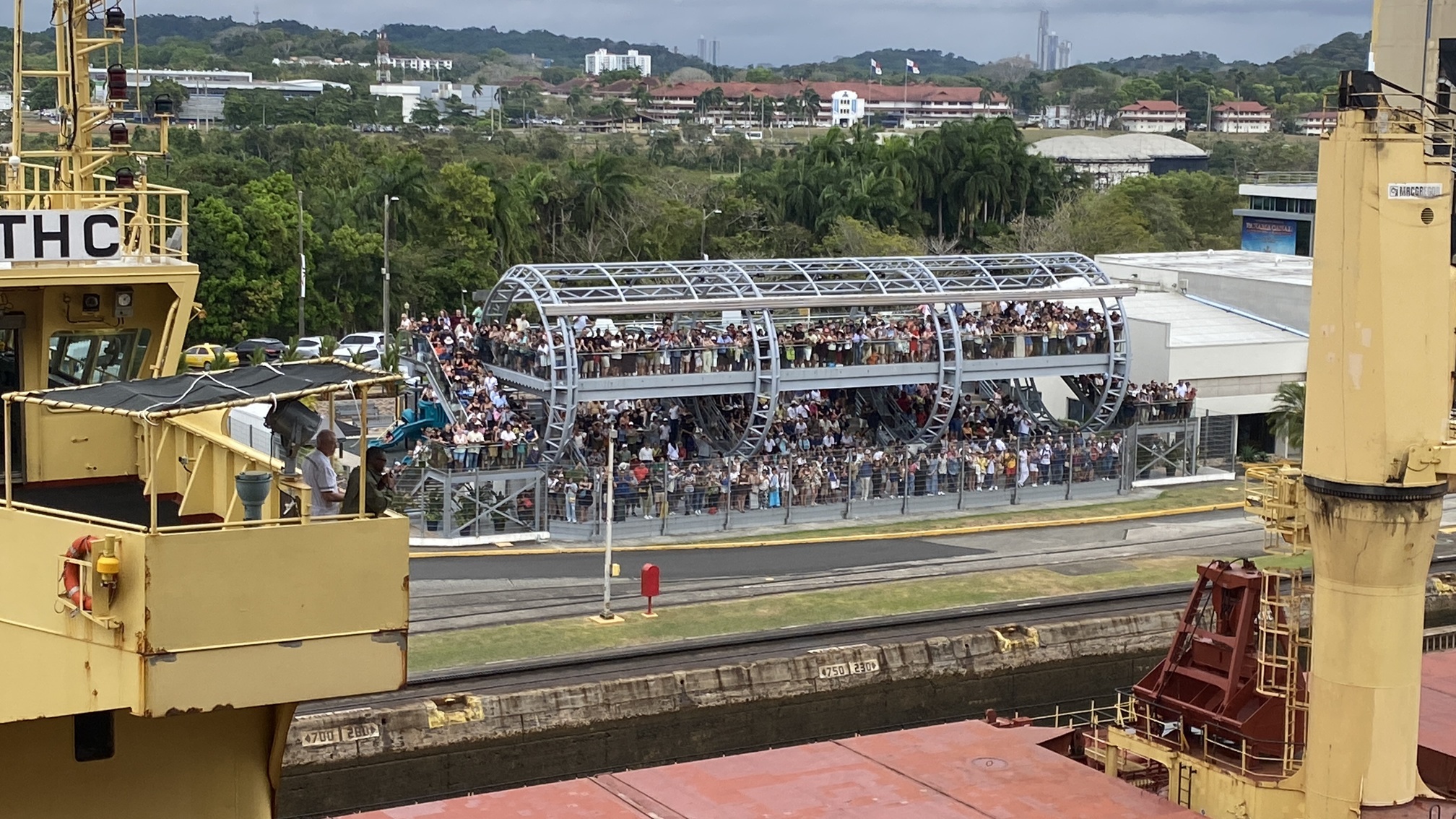
In the adjacent lock you can see the captain, dressed in white, and the pilot of the Elsbeth on the radio, speaking to the mules that run on rails beside the lock with cables attached to the ship. They adjust the tension according to his orders. The crew adjusts the engines under the pilot’s direction, relayed through the captain. In the background, the viewing gallery was delighted to see a passenger ship. There was much waving in both directions.
All day we watched teams of experts guide ships through the canal with a precision that felt miraculous. Any attempt to step away from spectating was short lived; something new always called us back for another manoeuvre, another moment of coordination worth witnessing.
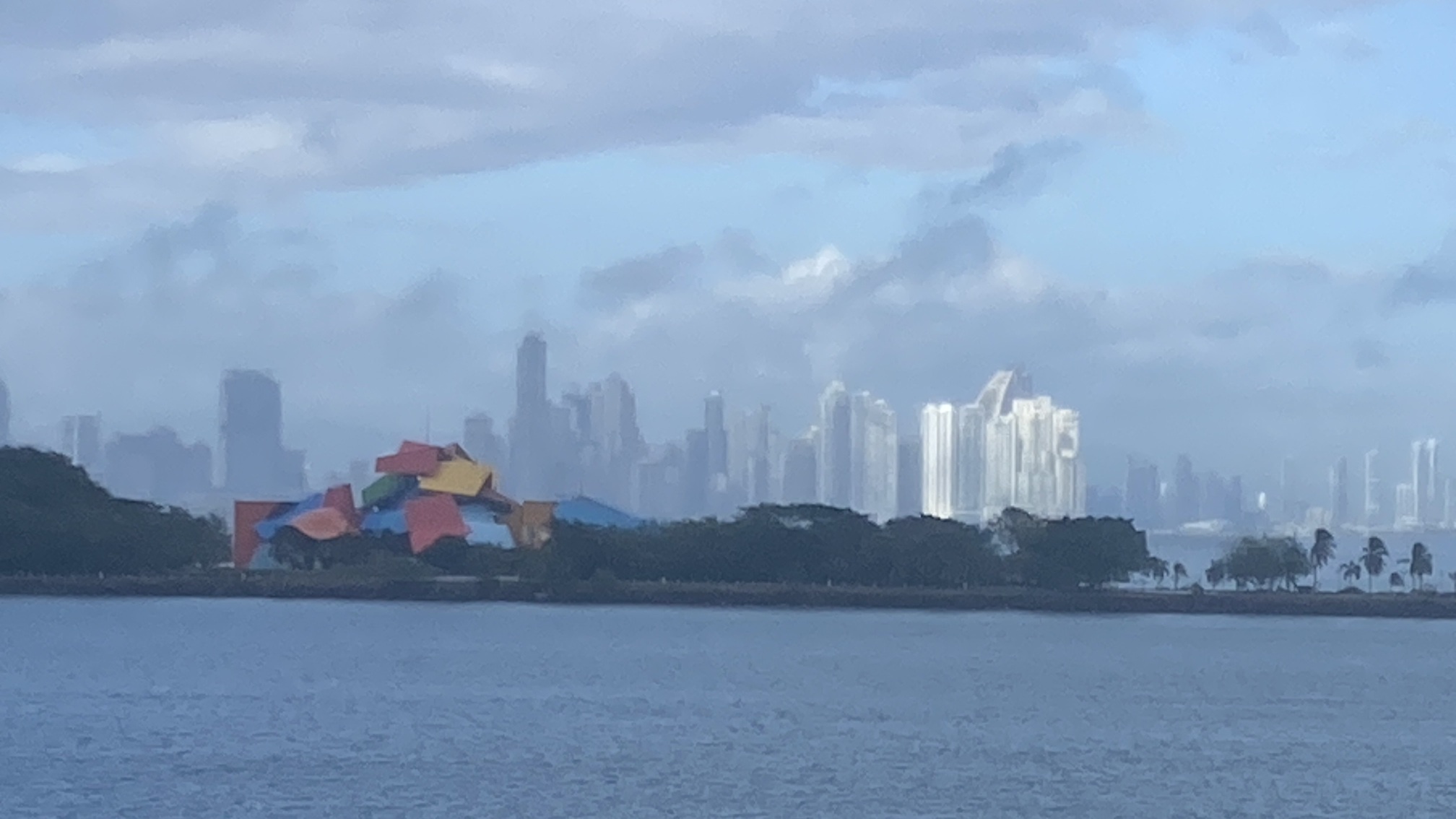
When the passage was complete, and Panama City came into view, I watched as the ship sounded its horn once, in gratitude, as the pilot stepped off,
an everyday gesture, but one I found quite moving. Just another transit for the Pilot who now left us to enter the widening channels of the Pacific.
Turning westward, we kept the coasts of Panama and Costa Rica to starboard, passing ships bound for the canal. Gradually the traffic thinned, and the vessels that had shared the transit with us peeled away, each disappearing into its own chosen horizon. Except one.
The commentary, offered sparingly and with real skill, blended history with technical insight, deepening the experience without ever intruding on it.
Now we turn west, and back in time, toward places that grew from the need to unload ships and carry their cargo overland to the Atlantic. These settlements rose from necessity, shaped by geography long before the canal made such detours obsolete.
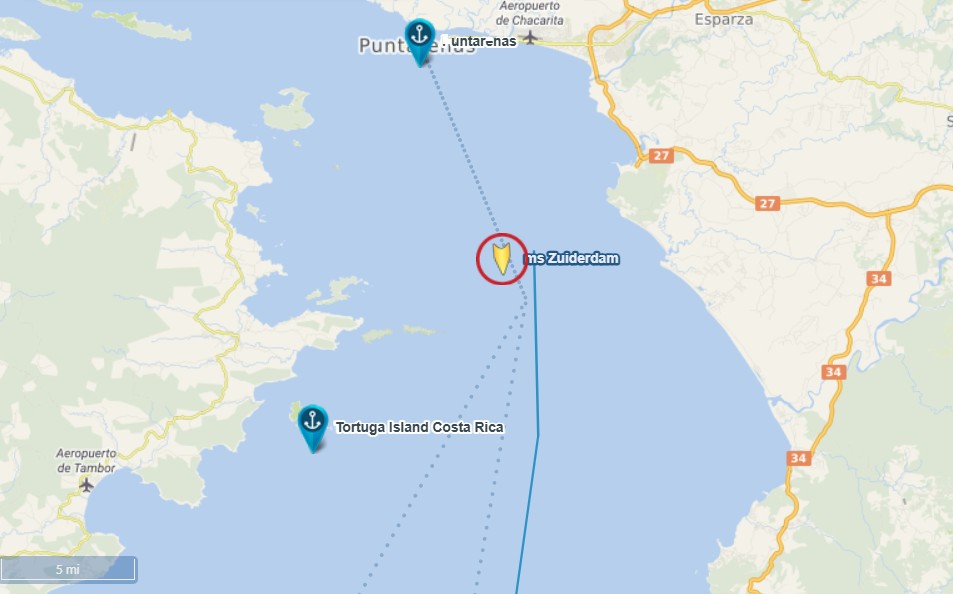
As we look ahead, the present asserts itself. The captain has warned us that our excursion tomorrow is in doubt. Puntarenas always presents unique navigational challenges for large cruise ships, shallow approaches, strong tidal currents, and limited maneuvering room. Tomorrow’s predicted current exceeds the ship’s available thruster capability.
Awoke and to my disappointment saw Sunrise from my port side window. Cruise Mapper confirmed we had turned around five miles short of landing. The current was visible, the strong winds channelled by the high land on both sides.
Across the past three weeks, the weather has produced many surprises. Miami opened with a sharp, unseasonable chill where temperatures dipped below the city’s usual, winds stiffening, and the air carrying a bite. That cold pulse was part of a larger pattern sweeping the Eastern United States, where a powerful winter system dropped heavy snow across the East Coast and pushed frigid air unusually far south.
As that system shifted, its influence rippled outward. Central America felt the pressure gradients in the form of persistent, forceful winds. The result is a rare, interconnected sequence: Cold snaps in Florida, deep snow in the Carolinas and some wind driven disruptions here at Puntarenas, usually a reliable harbour. But once we left the confines of the bay the air became hot hot hot and the Sun baked down on us. Perhaps the weather has turned a corner.
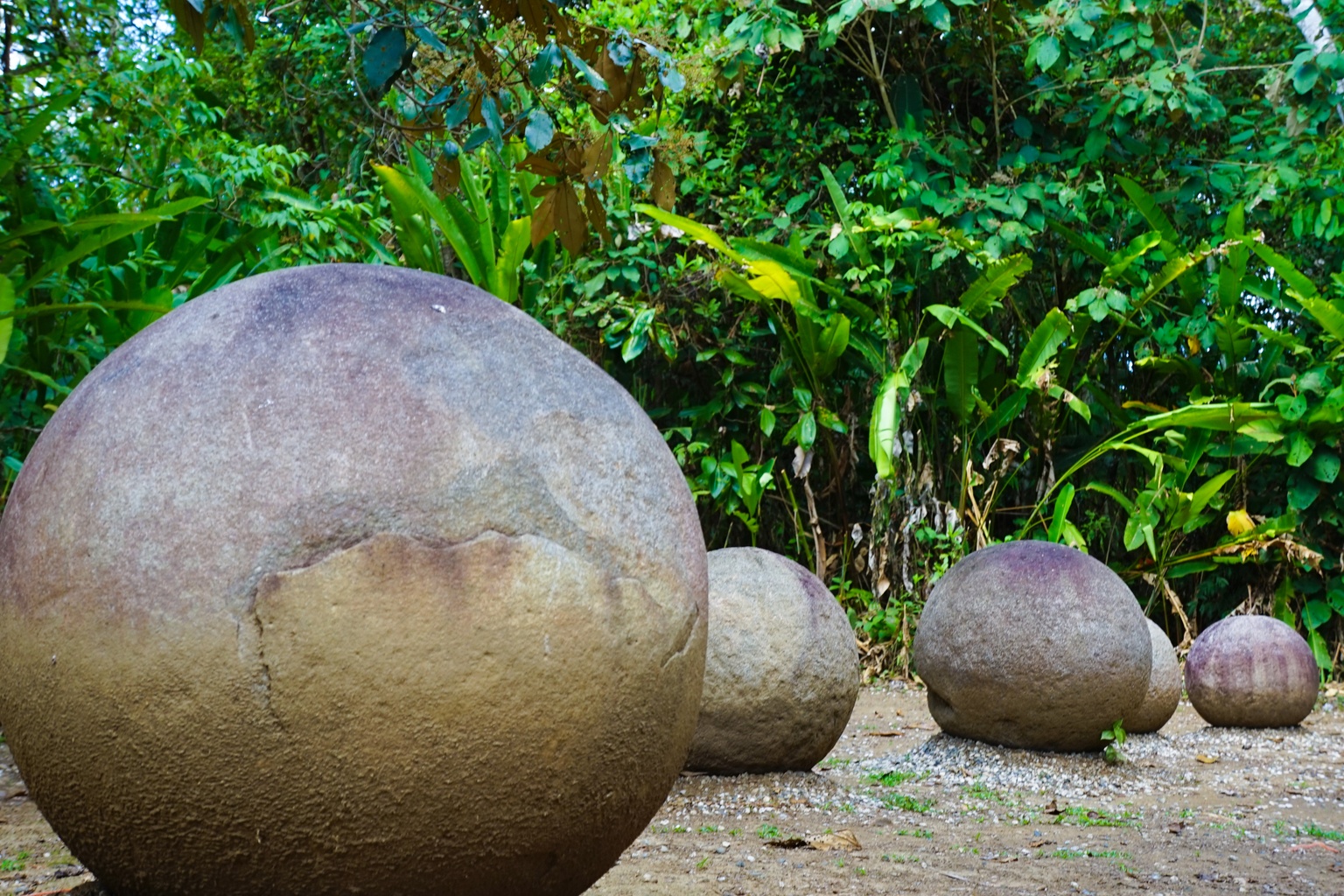
The Diquís stone spheres of Costa Rica are nearly perfect carved gabbro balls created by the pre-Columbian Diquís culture between 500–1500 CE. Ranging from palm sized to nine feet across, over 300 survive. They have to wait for another day.
And to quote the opening lines of The Days by Adrienne Su:
If only I could live my life, not write it, I'd have double the experience and be better at nothingness, at being present. The page, I once believed, offers permanence.
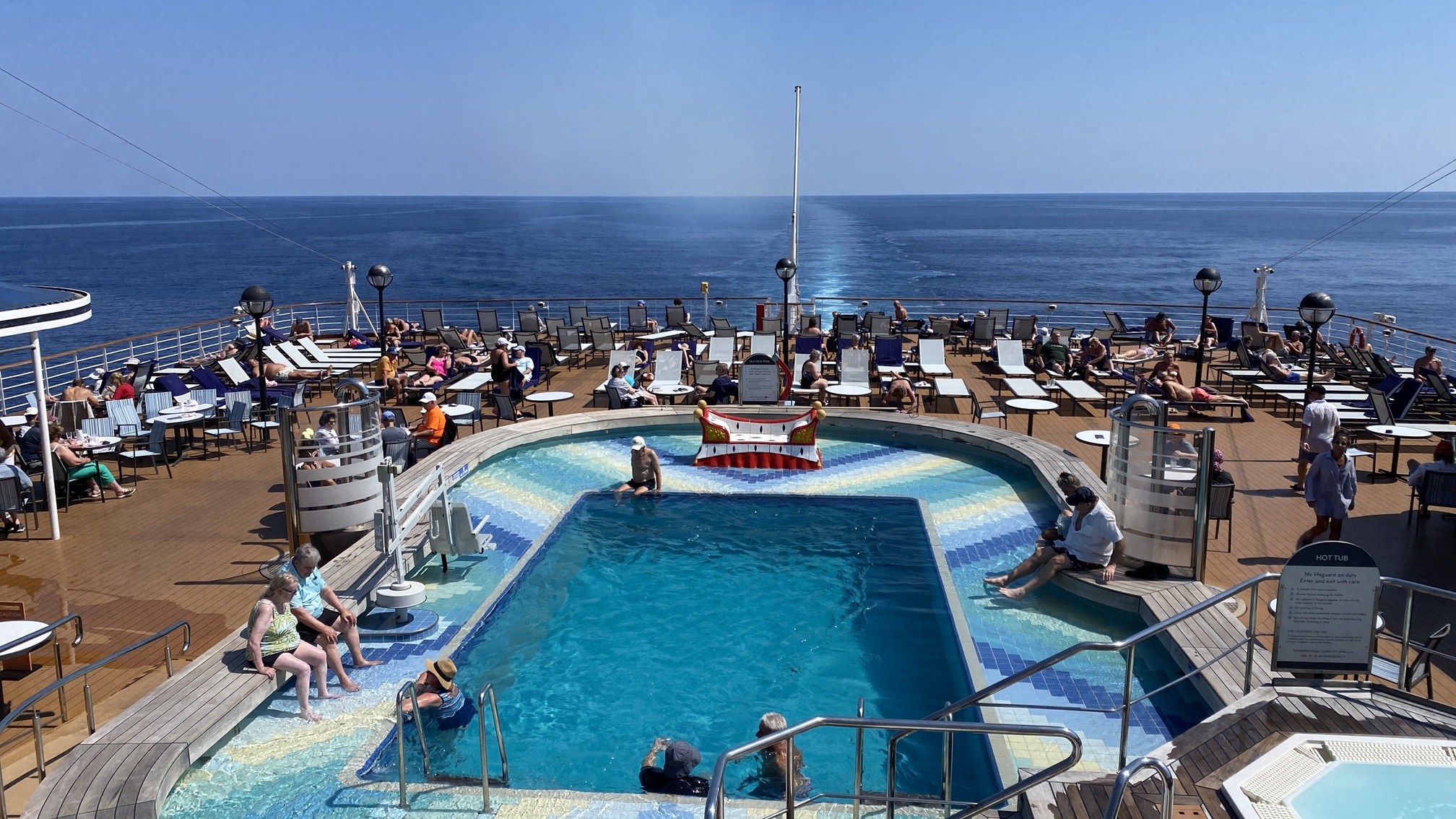
11.30N 87.40W being ahead of schedule, we’re pootling along and the ship is rock steady.
Looking back to earlier blogs I find our only previous encounters with the Pacific were from the shore, first at Miyajima in Japan, now some 8,500 miles away on the line I’m looking along from the cabin, and later at Negra in Chile, about 3,500 miles astern. This time, though, it’s a different kettle of fish. The horizon sits roughly 14 km away, and ships passing near it appear and vanish in a heartbeat. Bringing binoculars was a wise move. Every so often a dolphin breaks the surface, a quick flash of motion against the swell. Even 50 km from land, birds circle the bridge as if we are just another piece of coastline.
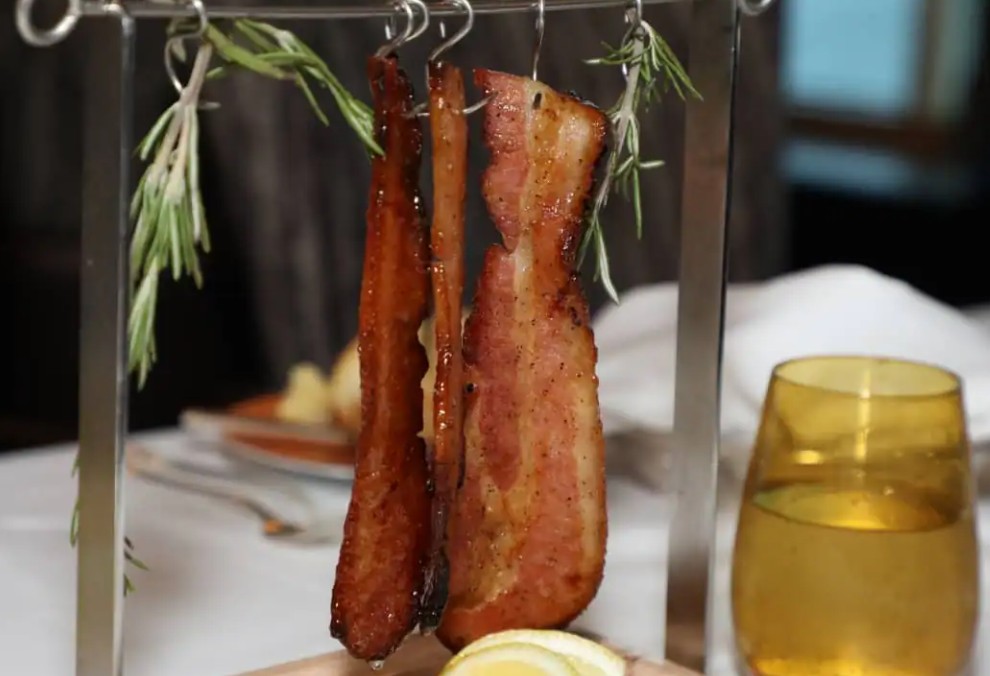
I must give a special mention to one of the culinary wonders of this ship, available in the Pinicle. Click the picture for the recipe on Hollandamerica's blog.
Silly old cruisemapper is confused by our non-arrival at Puntarenas and thinks we are still on our way! But I am listening to the Captain who reports all is looking favourable for getting ashore tomorrow in El Salvador.
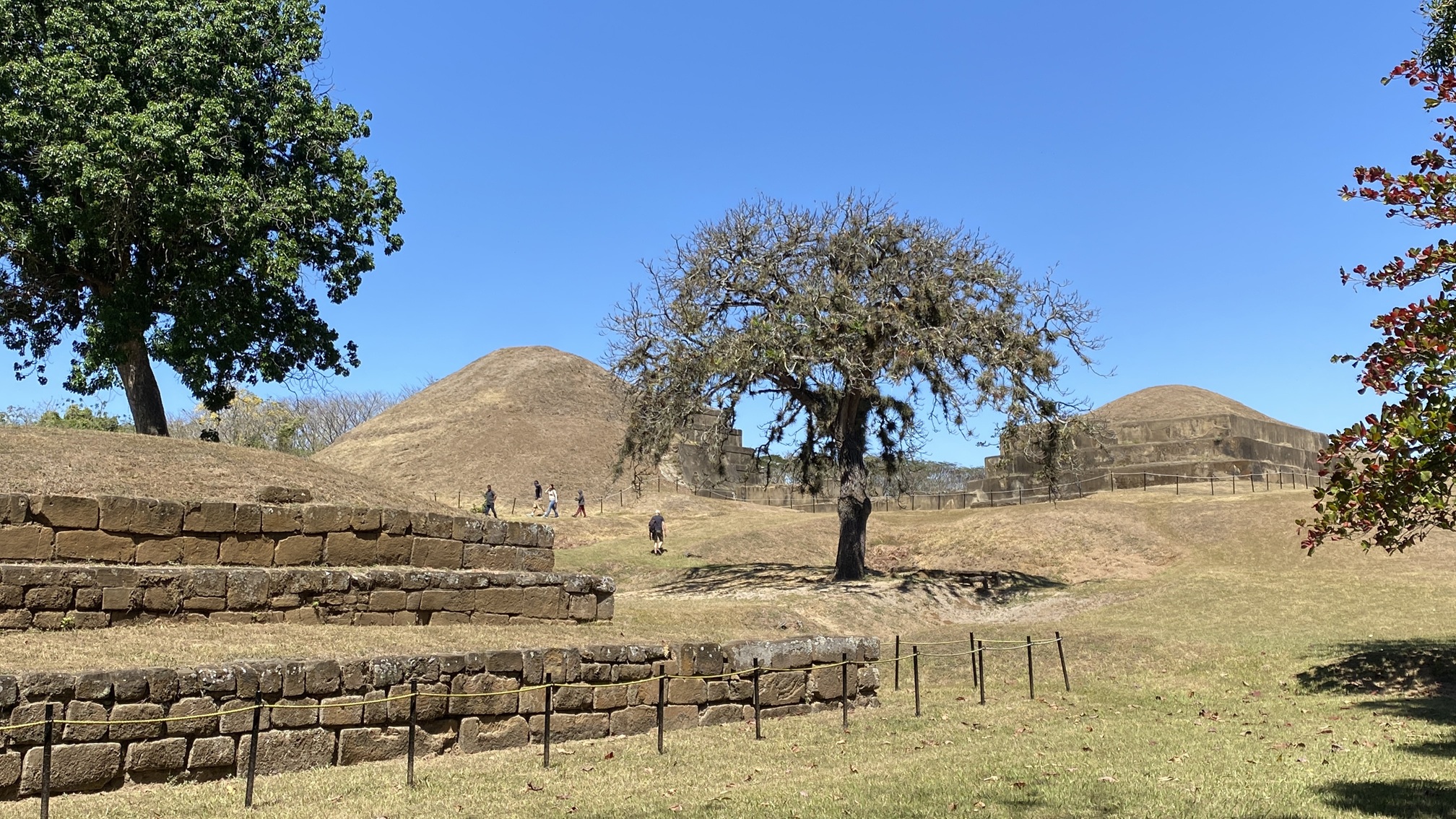
El Salvador has a volcanic profile and offered a day of Sunshine, ash and stone. At Joya de Cerén, the so called Pompeii of the Americas, the past felt startlingly close. A Maya farming village, frozen beneath volcanic ash, revealed its homes and tools exactly as they were left. Storage pots still in place, planting beds outlined in the soil.
The Maya lived in a world where land felt endless and seas formed the only clear boundaries. By 400 CE they knew the Caribbean, Gulf of Mexico, and Pacific framed their region, but they did not imagine a continent with edges. Their worldview centered on cosmic structure rather than exploration: a flat earth with four sacred directions, oceans as portals to other realms, and the east–west path of the sun as the axis of meaning.
A short drive away, San Andrés rose from the valley floor with a different energy altogether. Once a major ceremonial and political centre, it anchored trade routes stretching toward Guatemala and Honduras. Standing atop its platforms, the Zapotitán Valley opened wide, a reminder that power in the ancient world often flowed along the same lines as maize and obsidian. (Watch Apocalypto if you dare).
The present asserted itself too. The Global Volcanism Program lists numerous Salvadoran volcanoes with Holocene activity, and several, Santa Ana and San Miguel for example, that remain restless. Ninety five earthquakes have shaken the region recently, the largest a magnitude six near where we came ashore.
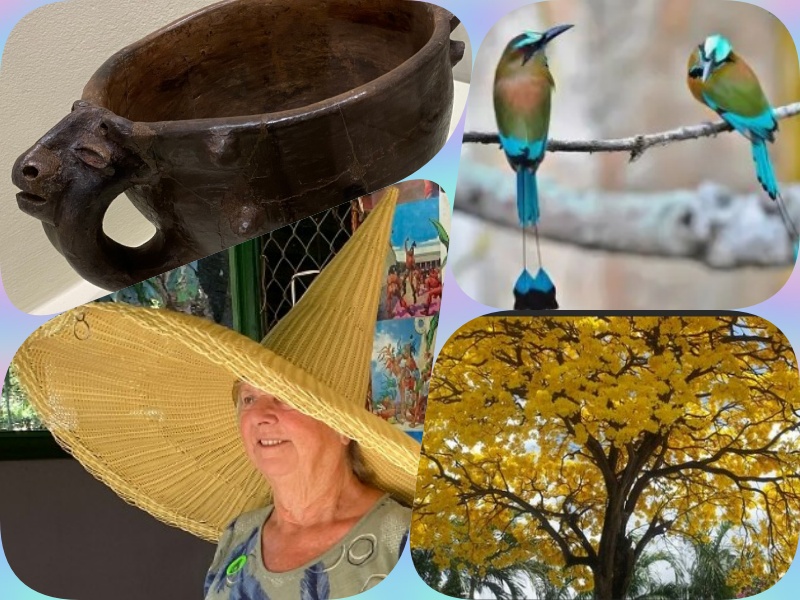
Yet amid all this tectonic motion, the national bird, the turquoise browed Motmot, seemed a perfect emblem: vivid, balanced, and loyal to its pair. The road cuts through semi-tamed jungle with many different trees, some are stunningly coloured.
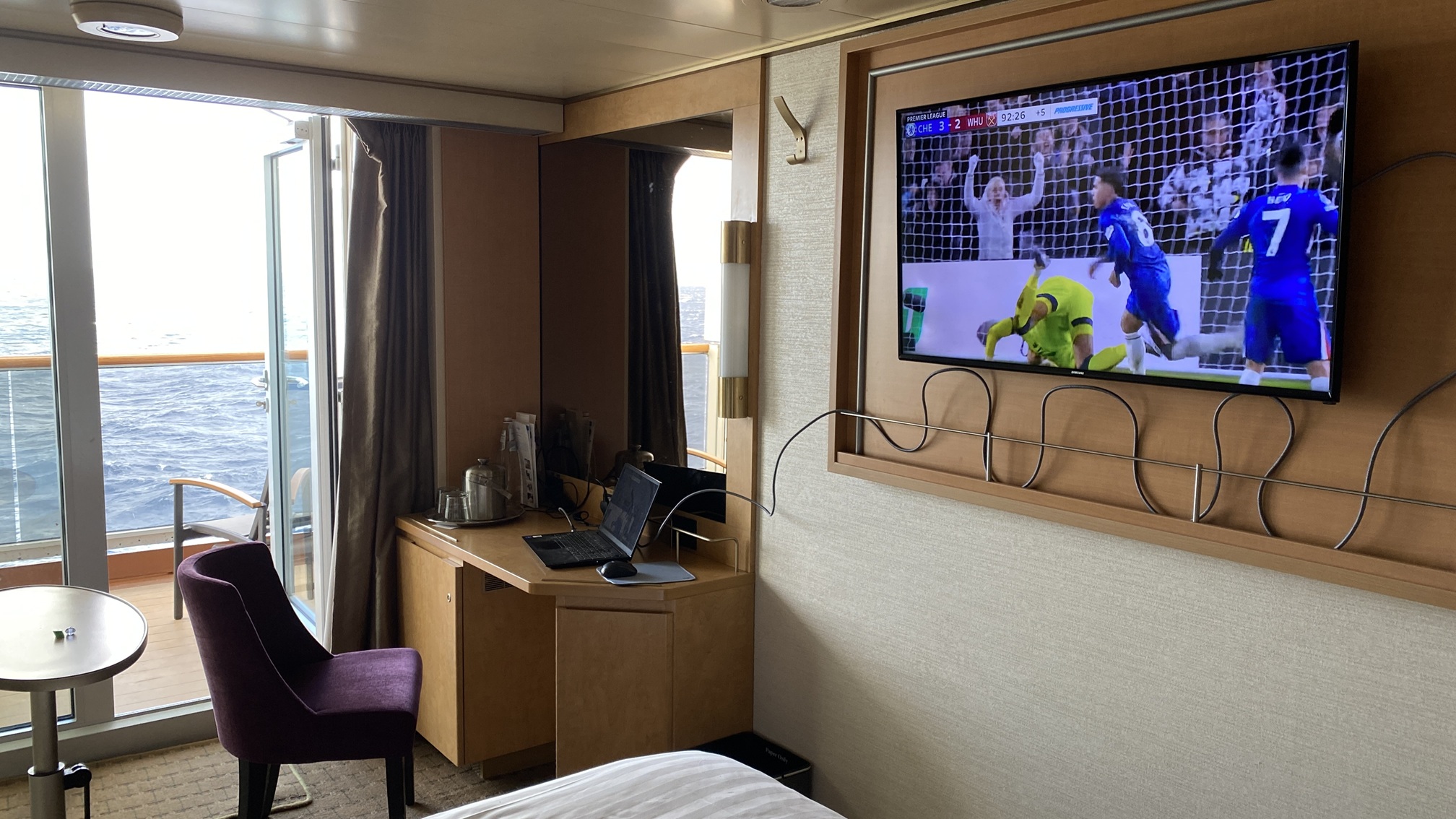
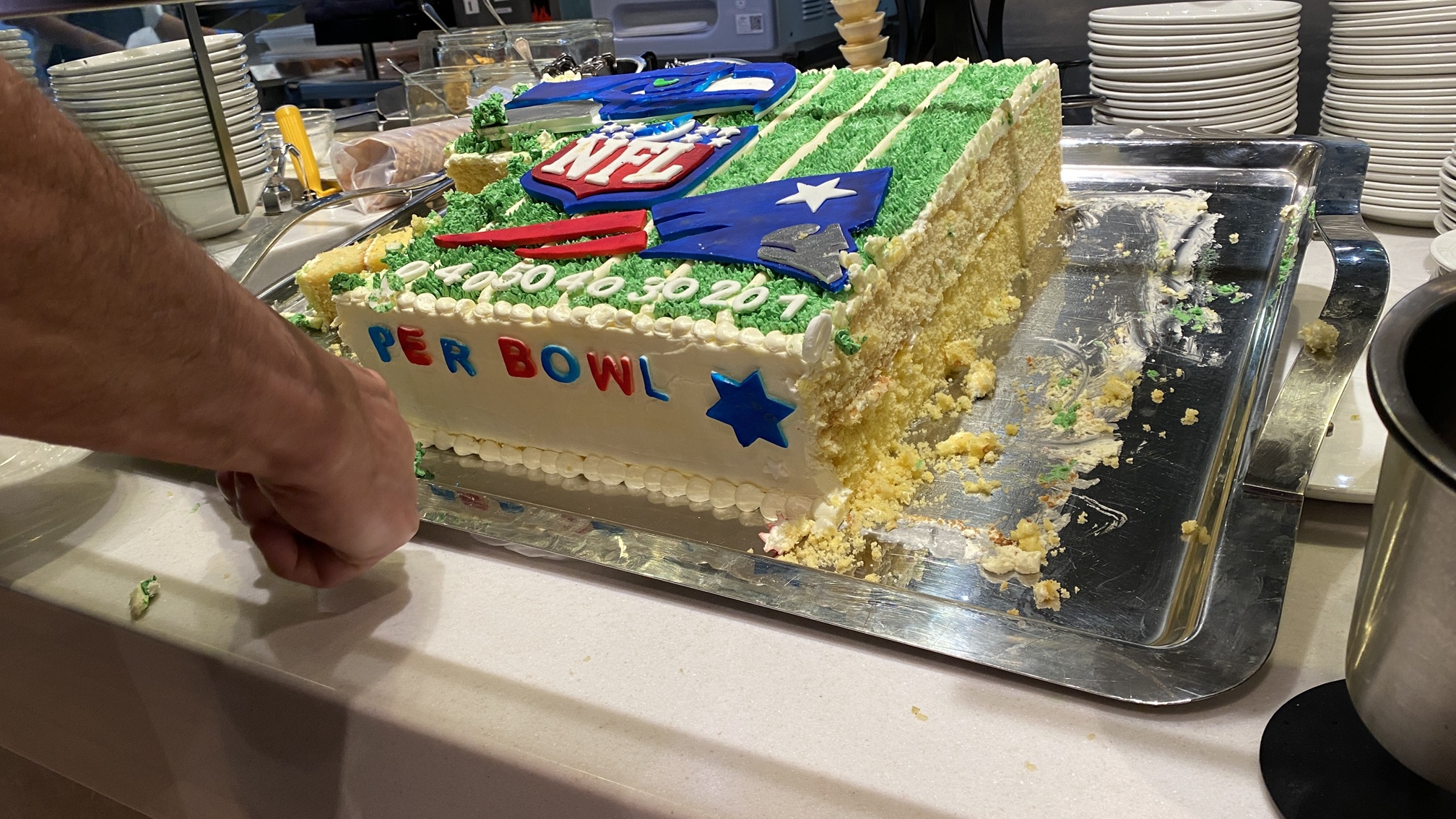
Watched the pre-match business and the first quarter of Superbowl LX in the almost full main theatre with the real fans. Ship provided seat service of popcorn, drinks and mini burgers.
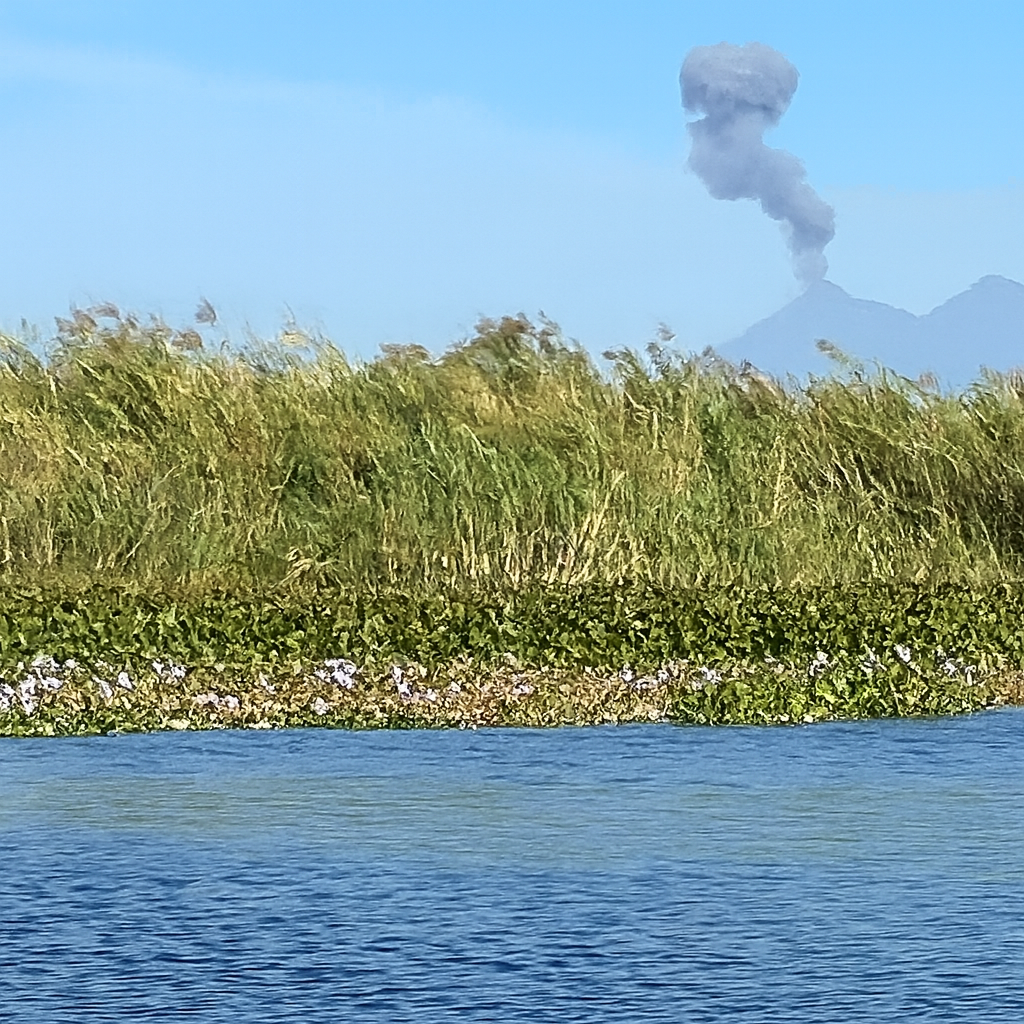
There is an active chain of volcanoes on the horizon, one is smoking right now and there are five Earthquakes a week on average. The immediate impression once we start to drive is this is a dusty place. All the road side cafes and shops have a thin layer from the road. We guess this comes from the volcanoes because all the farm land is rich in volcanic soil and the beaches are black soft and fine sand.
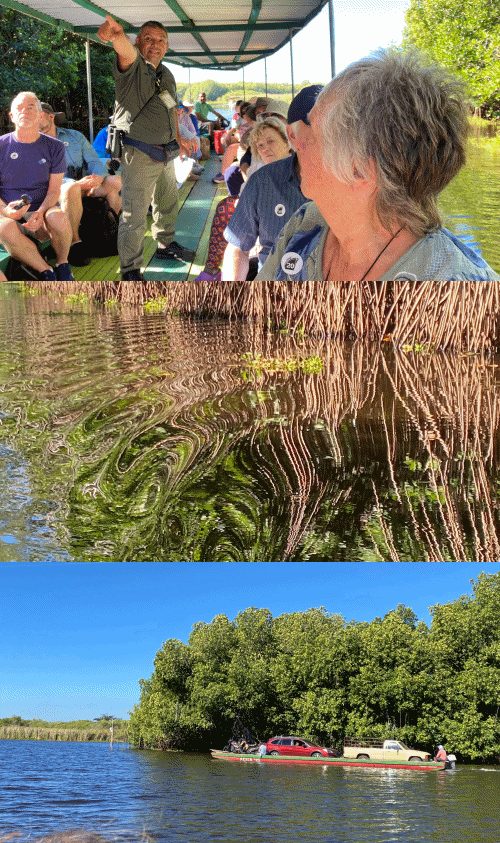
First we visit the wetlands. They form part of a wider Central American network of coastal lagoons, mangrove forests, and river delta systems that support high biodiversity and provide essential ecosystem services. They are nurseries for life and stabilize shorelines by buffering storm impacts. We ventured on the area where freshwater inflows with brackish coastal systems. It was truely amazing to sail quietly with so much life everywhere.
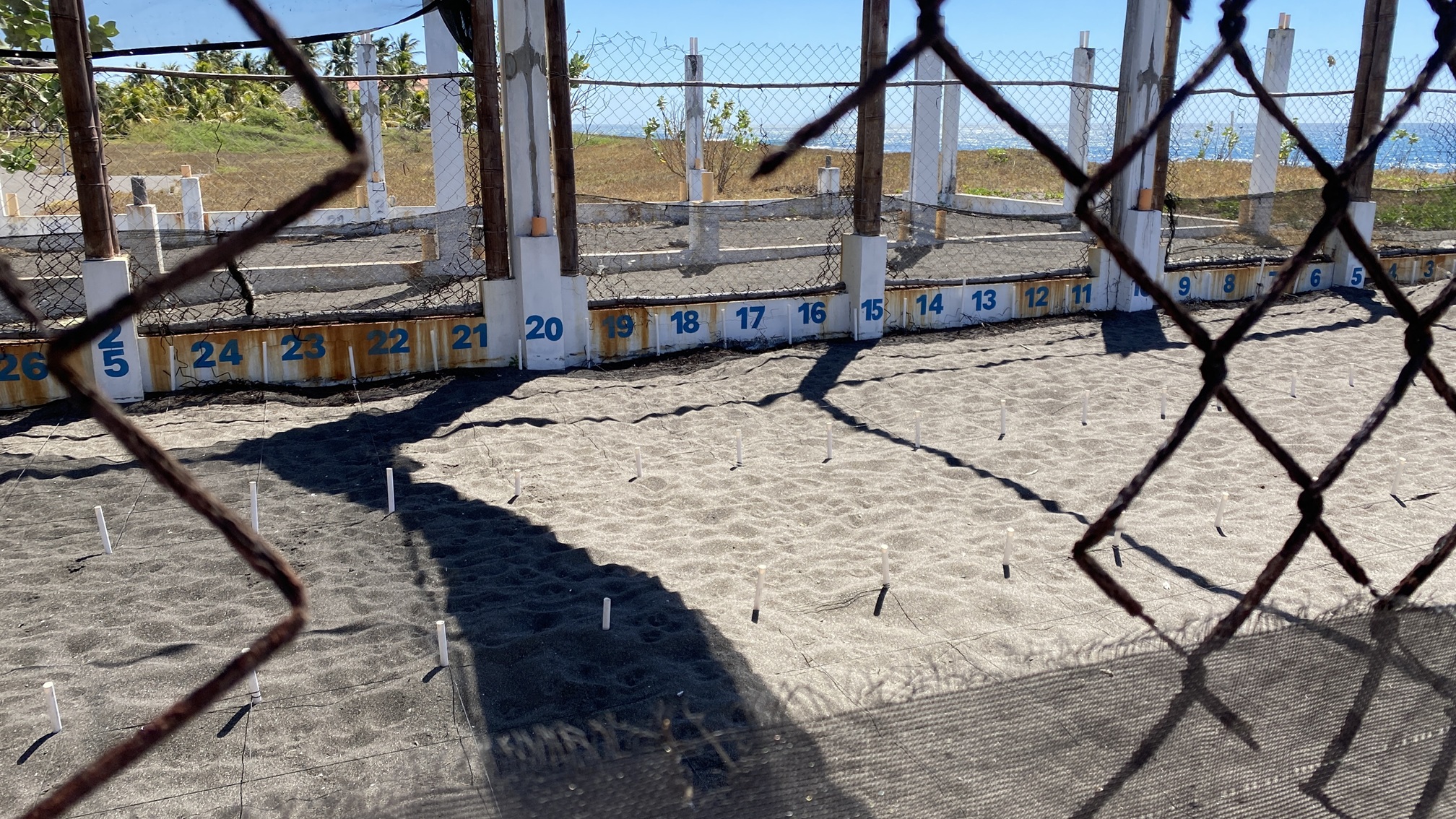
ARCAS is a wildlife rescue organization headquartered here. We visited one of their hospitals on the beach. It cares for any animals injured or orphaned with a view to liberating them when they have recovered. Our visit focused on turtles which are threatened by poaching, coastal development, artificial lighting, and predation. Safe areas are available for egg laying and then the eggs are cared for until they hatch and make the short trip to the sea for themselves.
They use a co-ordinate system to keep track of where the eggs have been laid. The fence around is only two years old, but the harsh sea winds and Sun have rusted it away already. Plastic will be the replacement.
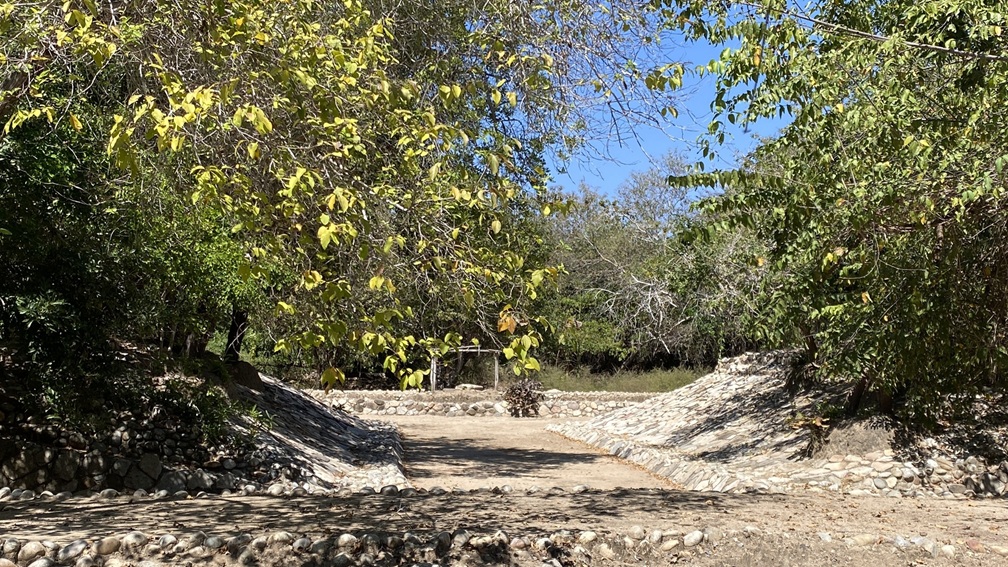
Copalita spent 1,700 years bustling with life, ceremony, and ball game areana ownership, only to be abandoned 500 years ago and immediately smothered by the tropical dry forest. Today the pyramids peek out like embarrassed guests who overslept by half a millennium. Wildlife has taken the day off except snakes, who apparently received the memo but politely keep their distance. The three visible structures - the big pyramid, the small pyramid, and the eternally photogenic 'I' shaped ballcourt all stand as reminders of a once grand center now gently dissolving back into the landscape. With trees sprouting from every crevice, the whole place feels like archaeology’s version of a neglected houseplant: still alive, just waiting for affection.
The reception area has empty spaces for shops, we are the only coach today. The paths around the site are long, wide and well paved but trees low branches need trimming. It is as if not many visitors ever come here. Our guides do well, filling in the time with stories and fielding our questions, of which, some are better than others.
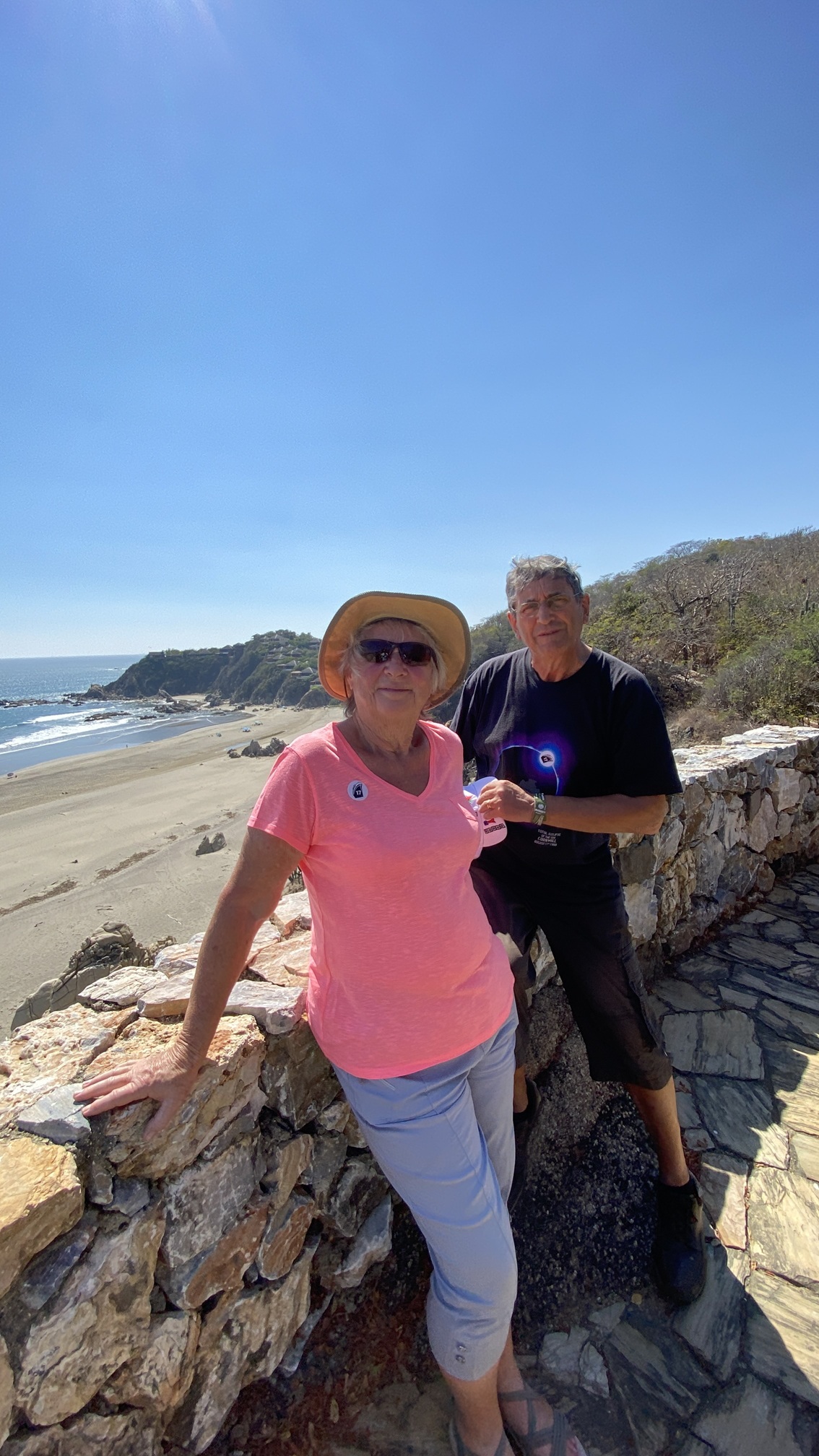
This vast complex with its very large pyramid and modest ball court must have been very important. Although right beside the sea, no easy way to get too it can be seen. We end with a moderate climb to a mirador overlooking a wide beach. It is over 90 in the shade today, the Sun is relentless, it is a long way up and even longer straight down.
I'd rather not have a wrist band but at least, the twenty seven year old eclipse T-shirt provides just the right spot for my tour ID sticker.
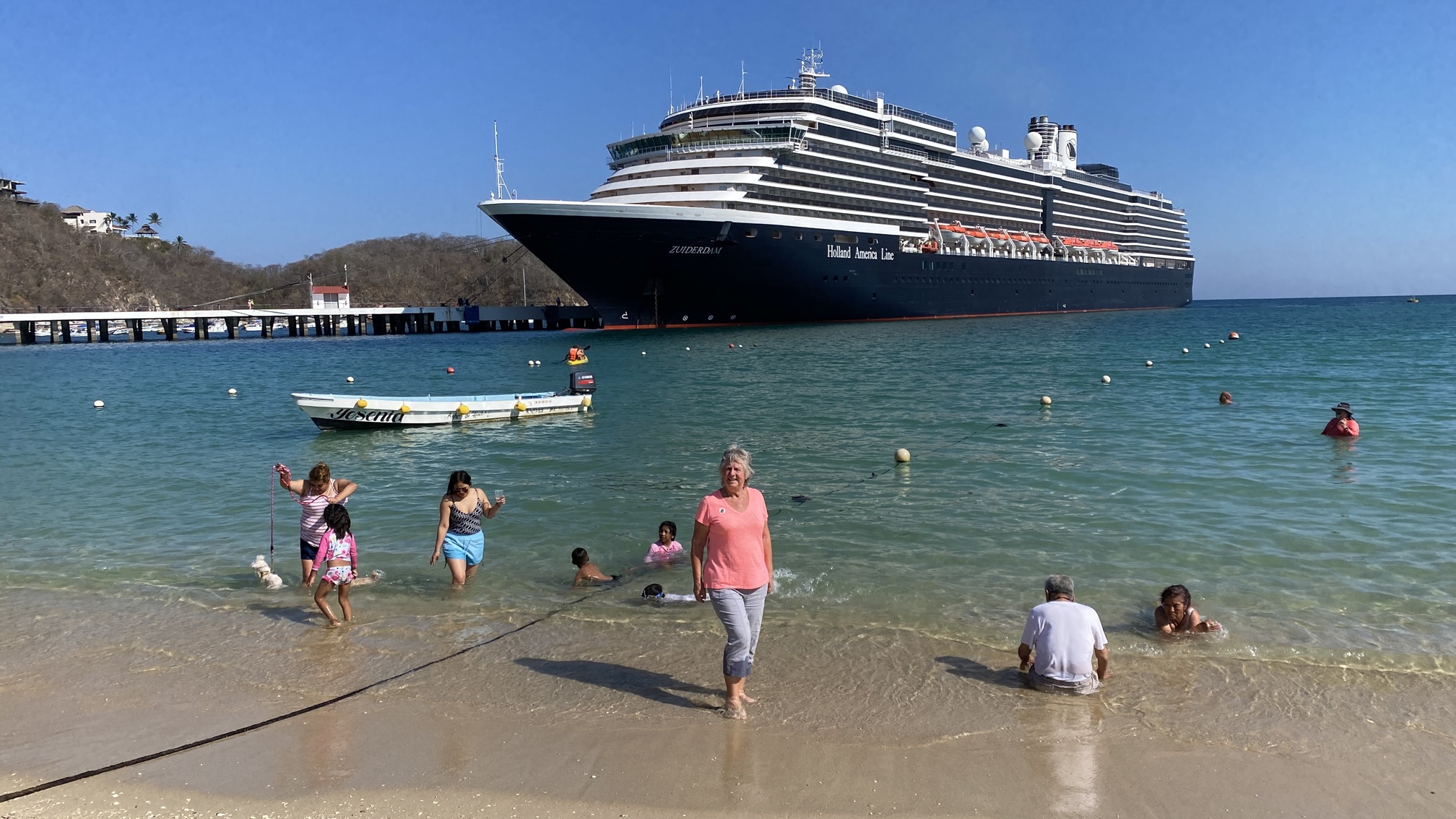
She's a beauty and a wonderful sight parked right on the beach.
Today we gave five long blasts on the horn. It is one of the clearest, most unambiguous signals in the entire maritime sound signal vocabulary. It means: “Danger signal — I doubt you are taking sufficient action to avoid collision.” We went to the window. Although 20Km from land a small open boat with an outboard motor was ahead. Two men were in it. They approached the pilot's ladder, but we do not know any more than that. Probably local fishermen as small pangas with outboards are the backbone of coastal fishing in Mexico. They routinely operate 30–50 km offshore and a big ship will attract bait fish allowing the fishermen to catch the huge Dorado they want.
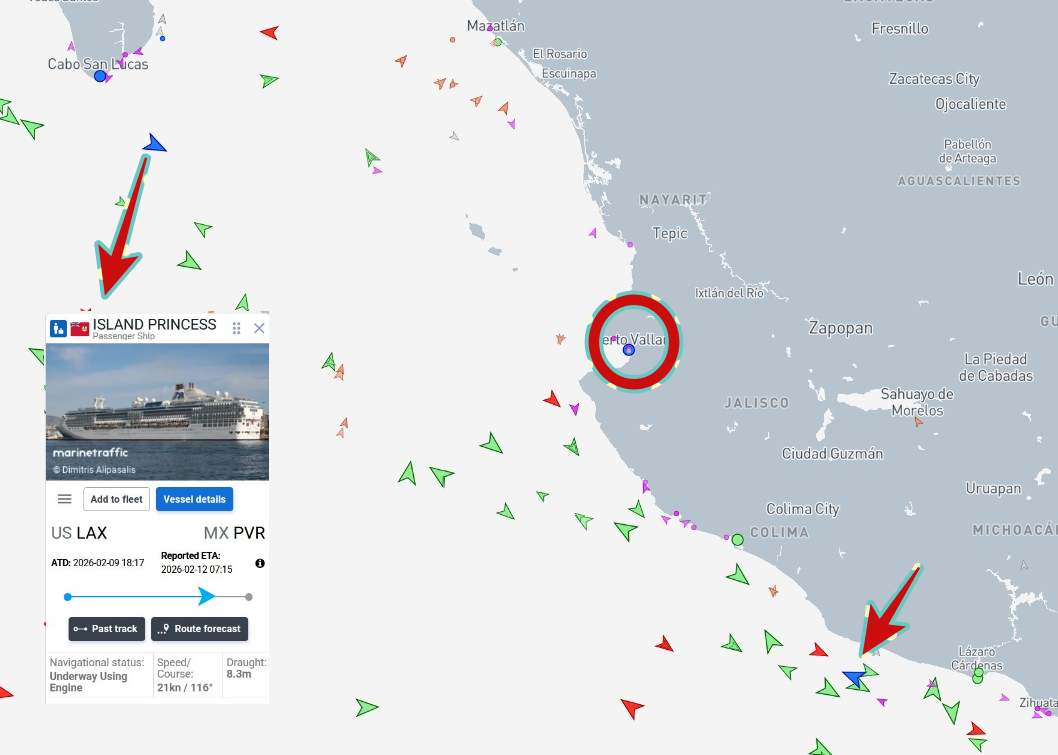
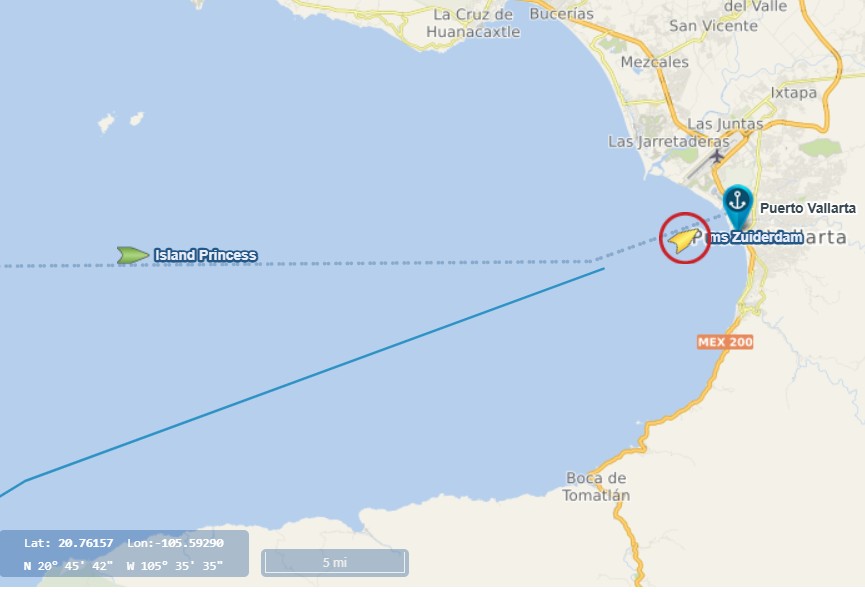
Meanwhile, the Captain says we are racing the Island Princess to Puerto Vallarta and he wants to be there first! Faites vos jeux.
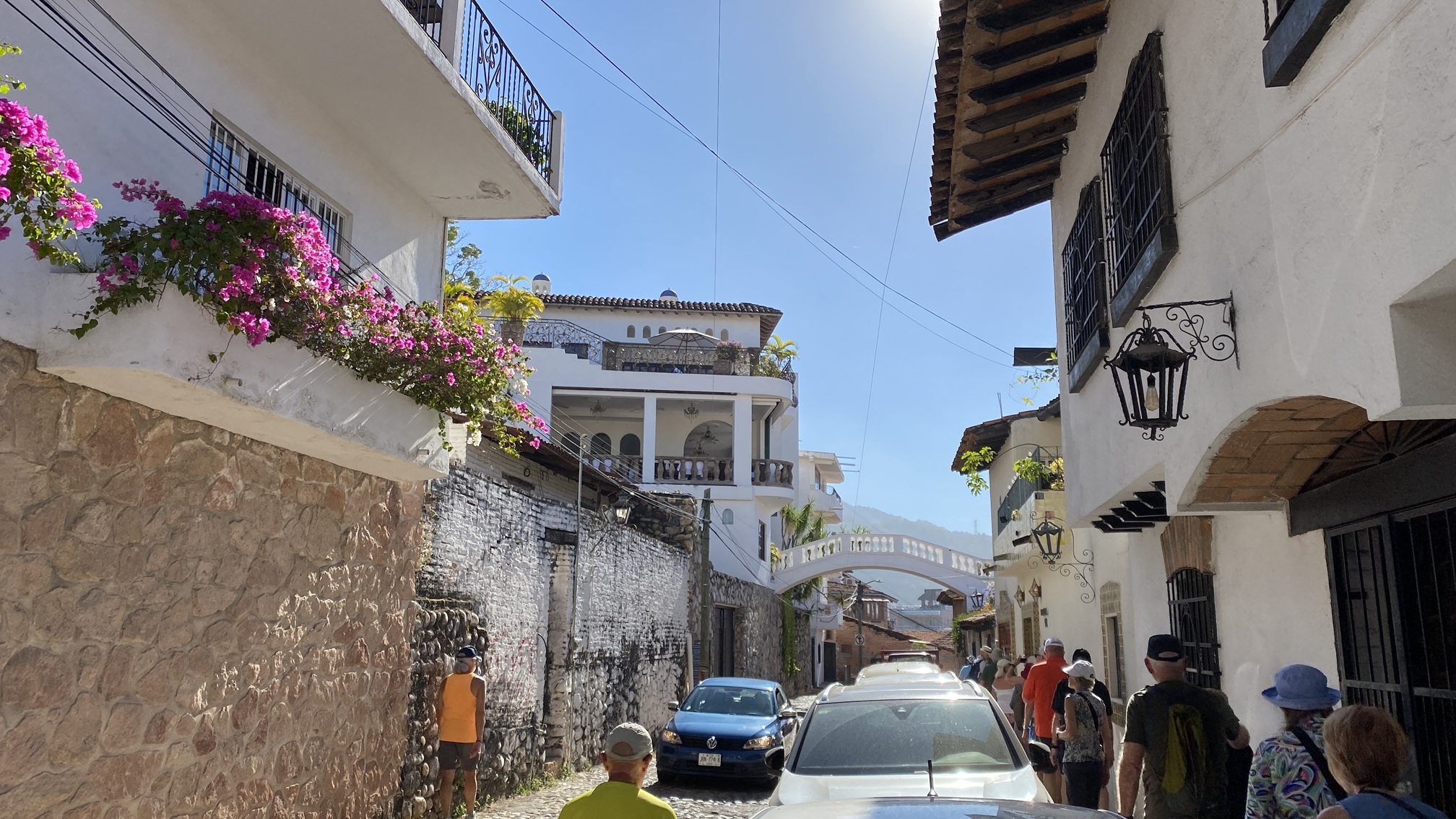
More tacky than tacos, more Blackpool than Benidorm, 'life's a beach' here as we join the 'snow birds' (Americans migrating South for the winter months) to visit 'Gringo Gorge'. Elizabeth Taylor's place. (On the left with the bridge joining Mr Burton's place on the right). It is a bit of a climb to this area, but not enough to lift us above the smog produced by the buses, lorries and coaches. Don't get me wrong, it is fantastic to be here in the fine Sunshine.
Continuing the walking tour around the town, the seafront is welcoming but the beach there is not appealing. Red flags out today as the waves smash into the interesting large round rocks which call out 'make me a cairn'. Pelicans swim and dive, despite the visible pollution in the bay. Other beaches are available round the corner and look wonderful.
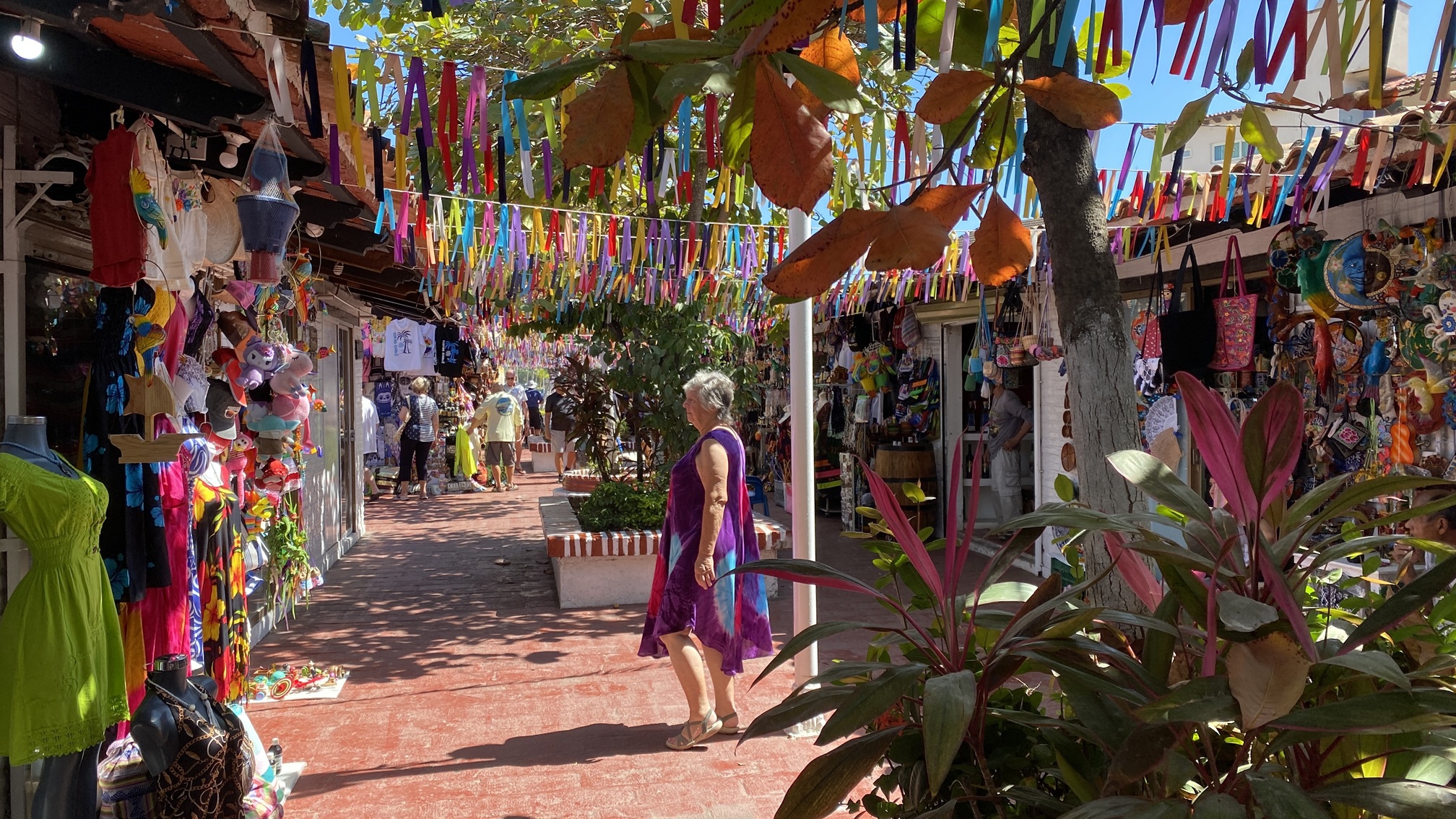
Our tour ends at a restaurant and we have a quick guacamole mixed at the table by an animated Mexican lady. Honestly, I have never seen an avocado smashed quite like that before. Then we regrouped on the ship, before going ashore to the port area for a shopping trip. Nothing was purchased on this occasion, but you must admit Liz's colourful camoflage is a winner.
Only a short hop to our next port, which lies interestingly at the end of a long spit of land. Even more isolated than Barrow in Furnace.
Postscript added on 27th February 2026:
I left Puerto Vallarta nine days before everything untravelled, and the contrast still feels surreal. One moment it was all sunlit boardwalks and lazy coffee then overnight, the city was engulfed in smoke and chaos.
The spark was the killing of Nemesio “El Mencho” Oseguera Cervantes, a major cartel leader, on 22 February 2026, which triggered a wave of violent retaliation across Jalisco. Cars were torched, roads were blocked, and fires broke out in areas I’d walked through without a second thought. Columns of black smoke rose over the Bay of Banderas, turning that familiar postcard curve into something out of a disaster film.
Flights were diverted and cancelled. Cruise lines pulled out too, with Holland America scrapping its Puerto Vallarta call as the situation deteriorated. The images that surfaced of burned‑out vehicles, shuttered store fronts, smoke drifting across the Malecón were hard to reconcile with the calm, colourful city I’d just enjoyed.
It’s a strange kind of gratitude, feeling lucky by pure timing. I keep thinking how easily I could have been there for all of it, instead of slipping out just before the horizon turned black.
The Milky Way arched over the ship to meet the horizon outside my cabin.
In this foreign sky I recognise nothing but the waning crescent Moon, rising now, an hour before the Sun. Then a very red star catches my eye. I reach for my planisphere. Never visible from England, it reveals itself as a supergiant — Antares, nearing the end of its life and destined for a supernova. I return to the rail and look again, and having given it a name, I feel full of knowledge.
Suddenly a golden flare streaks across the sky. A meteor. Then it’s gone, leaving everything unchanged, except for the small thrill that I happened to look up at exactly the right moment. I made a wish, (for another), but this remained ungranted, at least for now.
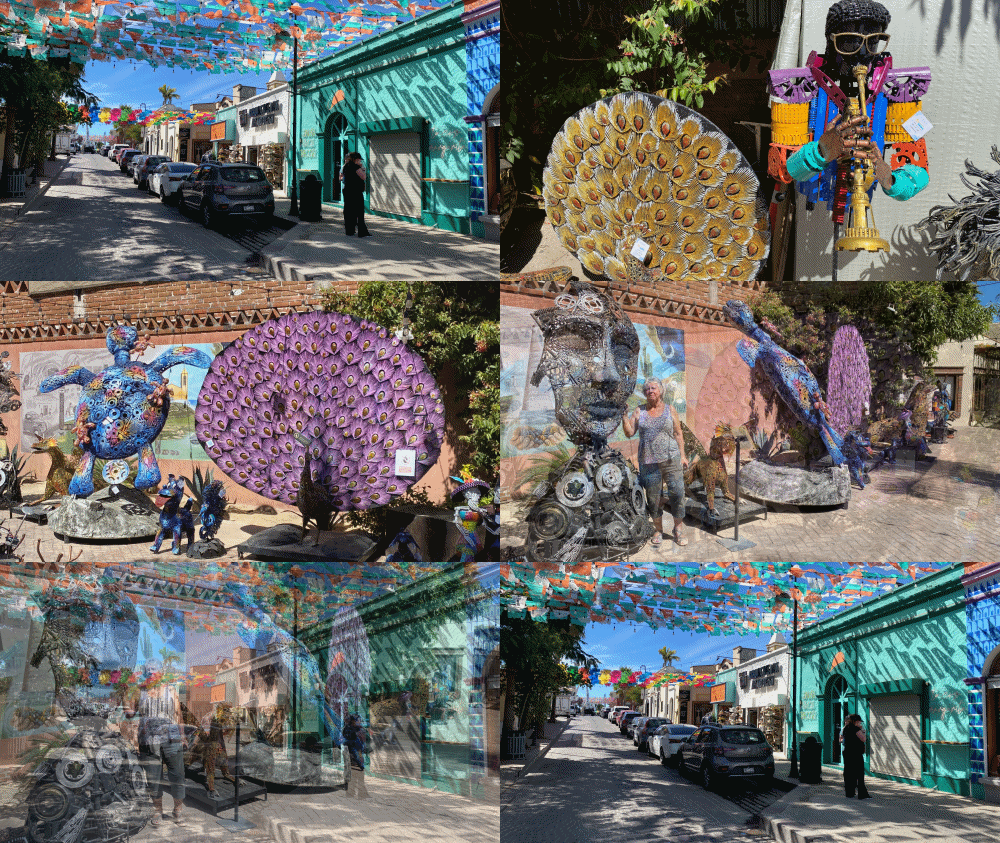
Wonderful trip today starting with a tender ashore and a forty minute coach ride on Highway 1 which gets us out of the pulsating port area into a magical artisan town named San Jose Del Cabo. We visited several galleries. Large sculptures are for sale at between $6k and $12k and frankly they would grace any home with the colours. Smaller pieces are also available. Then there are paintings and other wall hangings in different materials. All vibrant.
We all have Aztec recipe tacos and hibiscus for lunch. Paul tells us this is the beginning of the San Andreas Fault. The peninsular is moving 15 inches Northwest per year and there frequent Earthquakes here. We all head off on our own way for and hour.
What a strange geography is here. The peninsular must be 1,000 miles long. On the return ride Paul tells the story of a ship that came from England in 1851. It stocked up with food and water but when ready to leave, thirteen seamen refused. They settled in the town, married and had children. There are many people living today in San Jose with typically English names and our DNA is alive and well there.
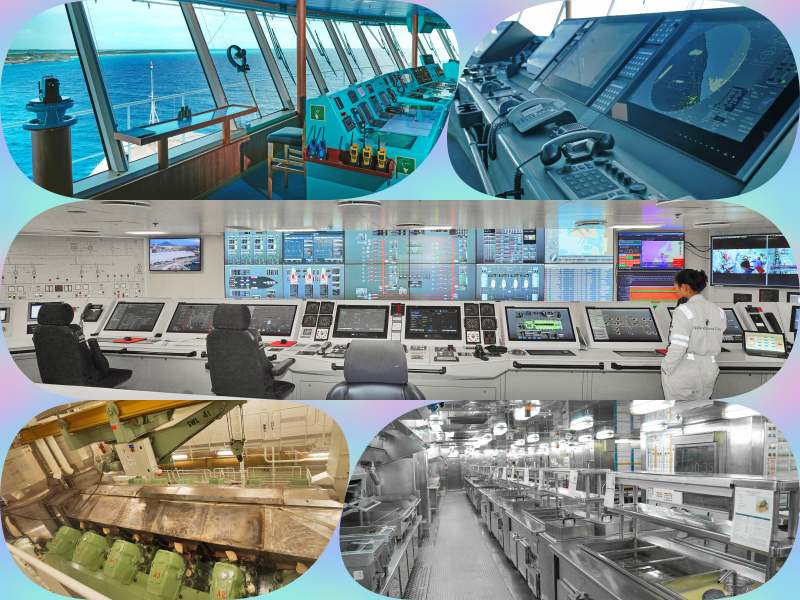
Our travel guide (who gave those wonderful talks the day before each landing and during the canal transit) was kind enough to gift me with a small treasure: an orange USB shaped like our ship, filled with photographs of areas passengers never get to see. I’m delighted to include this collage, Top: The Bridge, Middle: Engine Control Room, Bottom: The Engine and Galley. Surprisingly beautiful isn't it.
Two weeks we sailed from Miami’s warm light,
Past dawns that broke soft on the night.
Colombia’s colours, Costa Rica’s green heights *,
El Salvador’s shores where the days felt like dreaming.
Guatemala whispered old stories in stone,
And Mexico welcomed us bright as the Sun.
Oh Liz, my heart is yours ❤️ wherever I may roam,
Across each sea and shoreline ⚓ you are my truest home.
No voyage shines as brightly ✨ as the one I share with you,
My love, my constant compass 🧭 steady, deep and true.
We slipped through Panama’s passage in wonder,
Leaving Caribbean turquoise for the Pacific’s silver shine.
The towering locks lifted us, steady as thunder,
Carrying our vessel with a patient, deliberate line.
Side by side on the rail as the waters converged,
We watched two mighty oceans meet and the map of our world shift.
Now San Diego waits at the end of our line,
But endings are only beginnings in disguise.
For every horizon invites us to find new wonders to chase under widening skies.
And hand in hand, wherever we go,
The journey is sweeter because you are mine.
* 😅 Well, we did see the hills from the bay before drifting away 😎
Clocks went back again, now GMT -8 and the port lights are ahead holding promises of immigration, luggage, the airport and Manchester in 26 hours, (15:35 on 16th). Considering where I am writing this, that seems simply amazing.
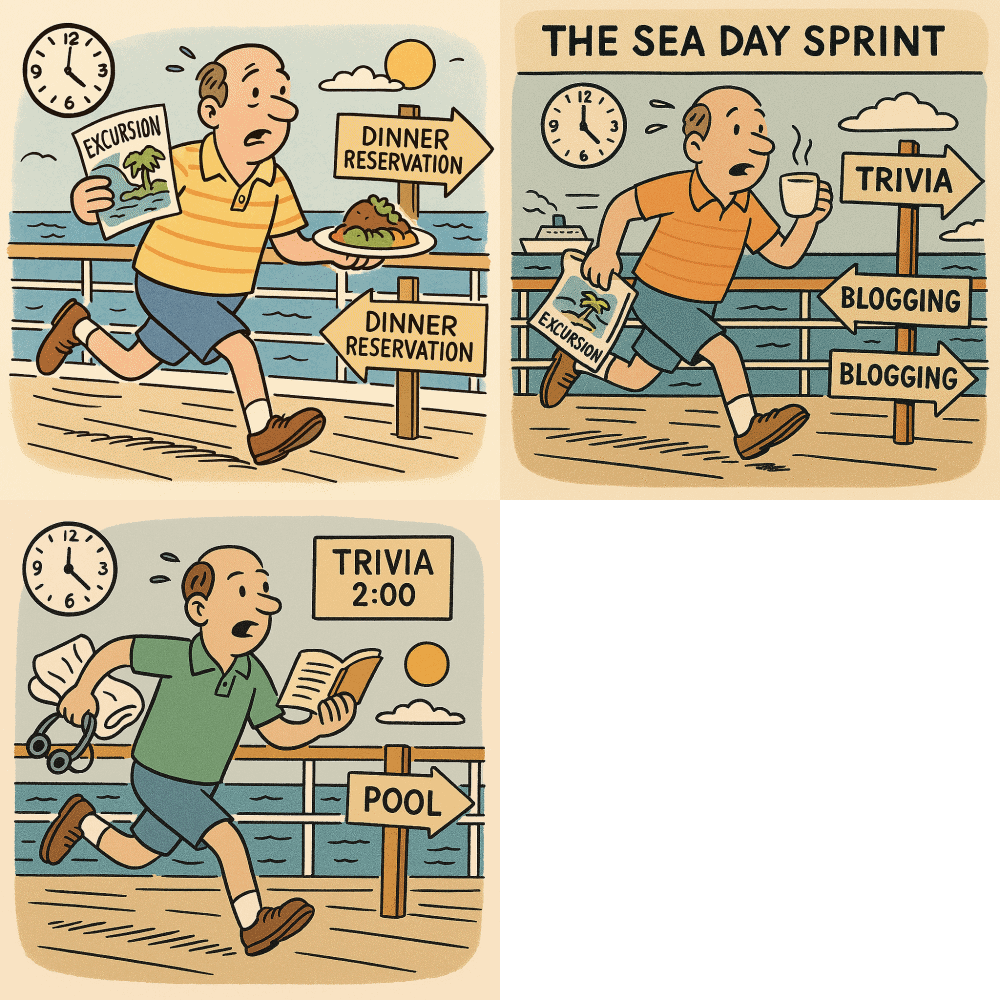
While being excited to go ashore with Liz in these amazing places and not underestimating the effort needed to do them, I had assumed the bits in-between would be a purely relaxing affair, everything to hand whenever I wanted it, long stretches of time to look at the world, play games, meet other passengers and keep up with my blog. And yes, there was that; the horizon always waiting, the sea doing its slow breathing beneath the hull, the gentle drift.
But alongside that ease, there was a quiet choreography to shipboard life that I hadn’t expected. There was always a next place to be at a particular time. Even the small pleasures like catching the comedian, turning up for dinner, wandering into the boat building finals became little appointments threaded through the day.
What emerged was a rhythm unlike life on land: A blend of freedom and structure, drifting and dashing, lingering and hurrying. A day could begin with a lazy coffee and end with a mad dash to make curtain time. It wasn’t stressful at all but it wasn’t the timeless float I had imagined either. It was something more interesting: a life where relaxation and routine danced together, each shaping the other.
Thanks for reading and listening! See you on the next one.